Explore our engineering designs, customized under rigorous ISO parameters for industrial material containment and high-capacity safety.
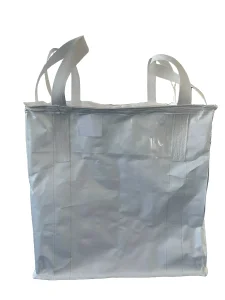
A masterclass in modern FIBC structural engineering, global bulk transportation mitigation strategies, and high-barrier containment systems.
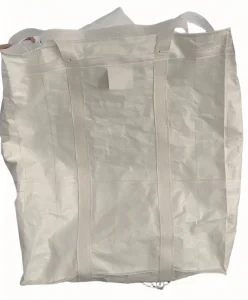
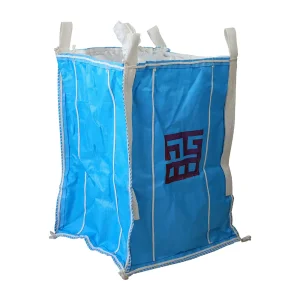
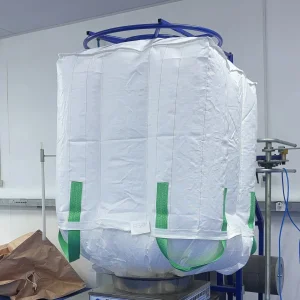
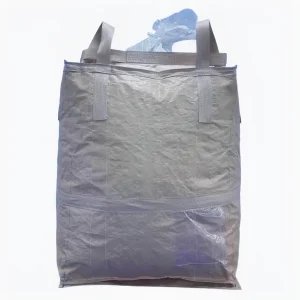
In modern industrial logistics, the categorization of "Metal Can Bulk Bags" represents two critical industrial paradigms. First, it defines specialized Flexible Intermediate Bulk Containers (FIBCs) designed to facilitate the high-density transportation of raw metallic materials, food cans, metal cylinders, and industrial components without causing internal fabric abrasion or structural punctures. Second, it serves as a semantic classification for heavy-duty, high-barrier FIBC packaging integrated with advanced multi-layer metallic-alloy liners that physically replace traditional rigid metal cans, tin drums, and barrels.
Global logistics demands have evolved from simple physical containment to advanced safety mitigation, moisture-barrier customization, and electrostatic dissipation. For enterprise-level procurement departments handling raw chemical powders, minerals, pharmaceutical intermediates, and lithium battery materials, choosing the correct manufacturer involves analyzing polymer compositions, testing tensile thresholds, and guaranteeing complete global regulatory compliance.
Key indicators, pain points, and strategic priorities for international procurement directors and supply chain managers.
Global chemical and food manufacturers demand FIBCs that maximize cubic shipping efficiency. Our custom-engineered baffle designs prevent the rounding or bulging of bags, ensuring stable stacking inside intermodal containers and eliminating unused transport volume.
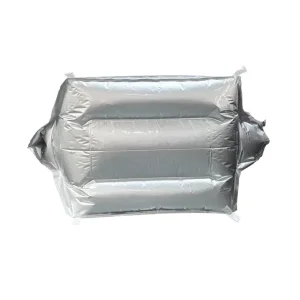
For fine chemical powders, agricultural grains, and mineral components, moisture intrusion causes severe clumping and product degradation. High-barrier aluminum foil liners maintain the inner climate, keeping the raw product dry, sterilized, and pure.
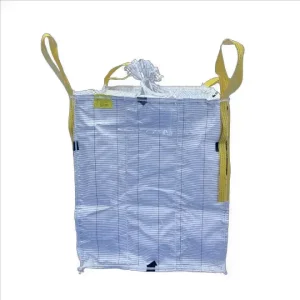
When handling flammable substances or fine metal dusts, dynamic friction can generate electrostatic charges. Employing Type C conductive bags with groundable structural loops prevents sparks, protecting plant assets and processing personnel.
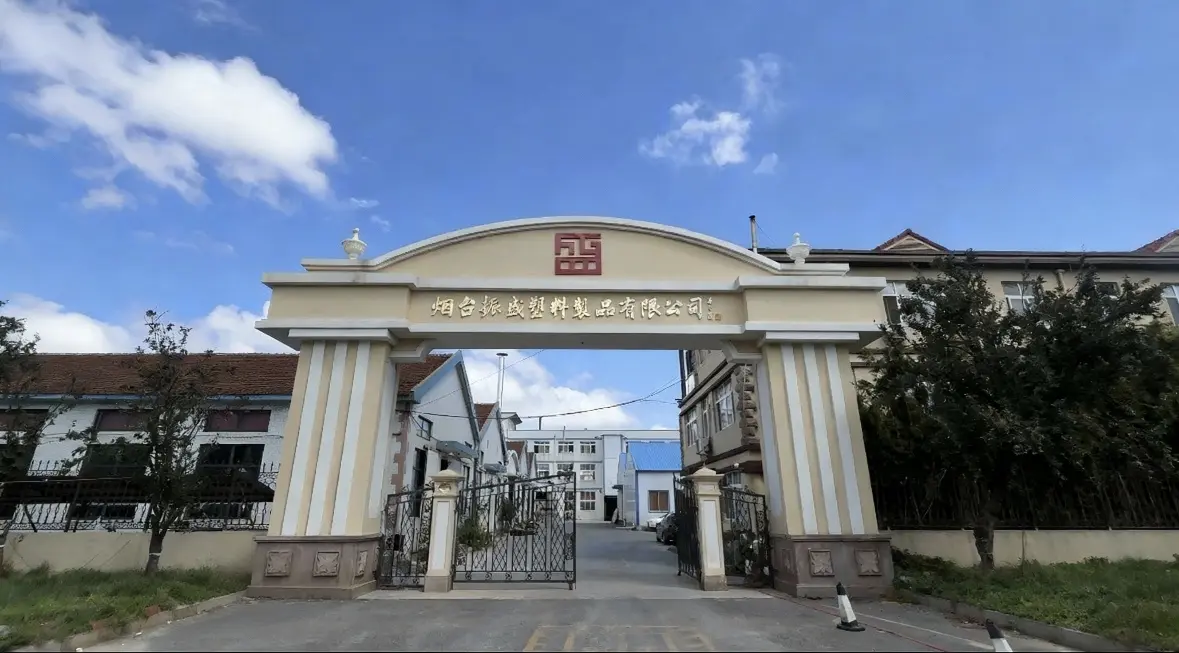
Founded in 1988, Yantai ZS Bulk Bags Manufacturing Co., Ltd. (Zhensheng) is a premier global manufacturer specializing in the customized design and production of mid-to-high-end FIBCs (Flexible Intermediate Bulk Containers). With over 30 years of dedication to the industrial packaging industry, we take cost-effective, high-performance customized solutions as our core developmental framework.
The company boasts strong industrial capabilities, with two modern production bases located in Laishan District and Muping District of Yantai City respectively, covering a total area of 60,000 square meters. We boast more than 300 employees, including over 30 professional and technical personnel and inspectors. We have built a complete closed-loop industrial chain covering raw material processing to finished product manufacturing, strictly controlling quality and delivery efficiency from the source.
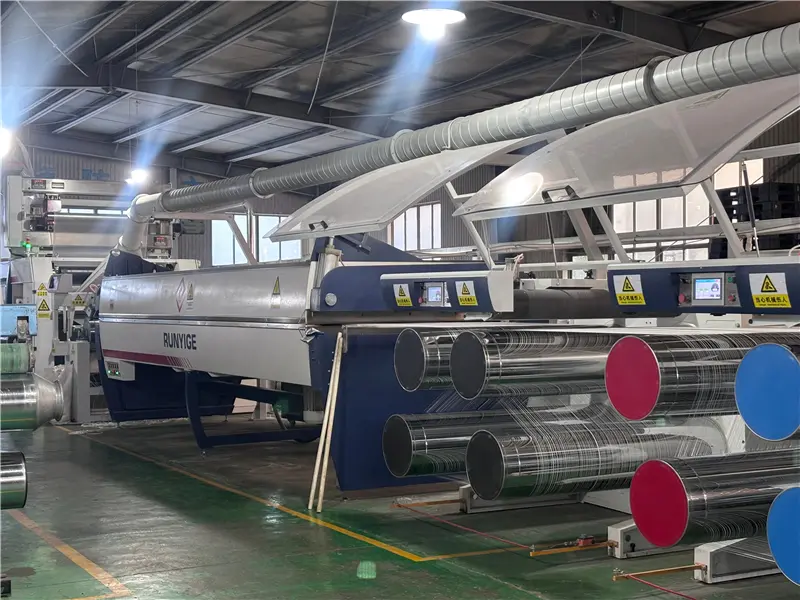
Backed by advanced production equipment and a lean management model, we maintain a stable monthly output of over 250,000 units and an annual output exceeding 3 million units, capable of efficiently meeting both bulk industrial procurement needs and highly specialized technical customizations.
An engineering comparison matrix highlighting structural limits, electrostatic qualities, and target industrial deployments.
| Classification Type | Material Core Structure | Electrostatic Property | Primary Industrial Use Cases | Safe Working Load (SWL) Range |
|---|---|---|---|---|
| Type A Bulk Bags | Woven Polypropylene (Non-treated) | No electrostatic protection | Aggregates, sand, calcium carbonate, inert minerals | 500 kg - 2,000 kg |
| Type B Bulk Bags | Low breakdown voltage coating (<6kV) | Prevents brush discharges | Dry chemical powders, cement raw mixes | 500 kg - 1,500 kg |
| Type C (Conductive) | Interwoven conductive yarns with ground loops | Fully groundable protection | Volatile organic compounds, fine metal powders | 500 kg - 2,000 kg |
| High Barrier Aluminum Lined | Polypropylene outer + multi-layer Al-foil liner | Optimal moisture & gas barrier | Lithium battery precursors, food ingredients | 300 kg - 1,500 kg |
| Baffle Jumbo Bags | Internal structural polypropylene baffle walls | Structural stabilization | High-density export storage, square shipping space optimization | 1,000 kg - 2,500 kg |
A closed-loop manufacturing system focusing on raw material purity, ultrasonic precision, and cleanroom fabrication.
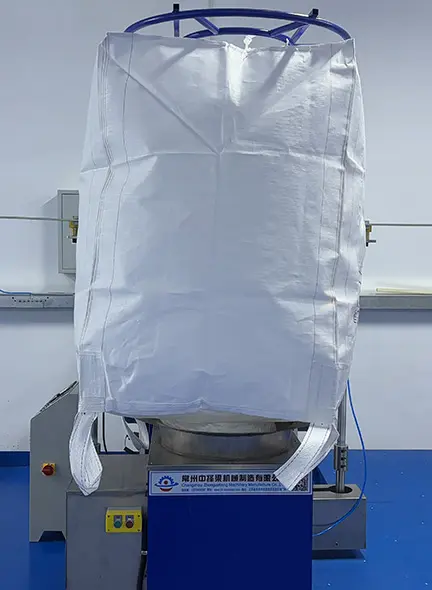
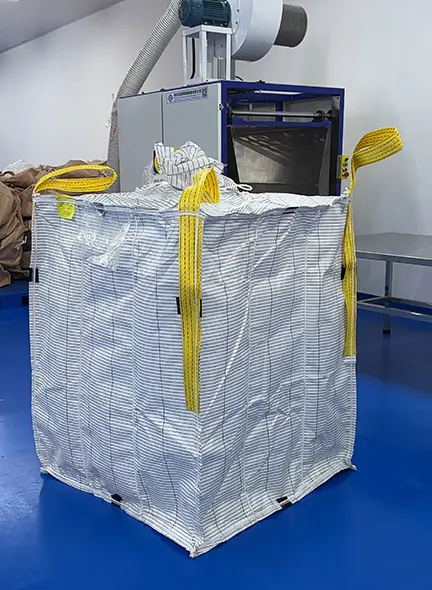
Especially for FIBCs designed for food-grade, chemical-grade, and battery-precursor applications, we utilize 100% virgin polypropylene raw materials. All technical specifications strictly comply with FDA food-grade and ISO environmental parameters to eliminate contamination risks from the source.
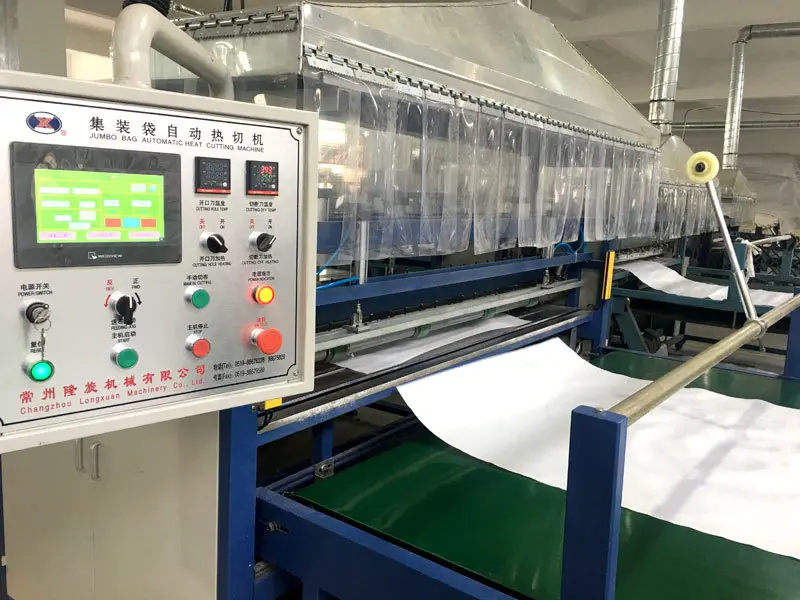
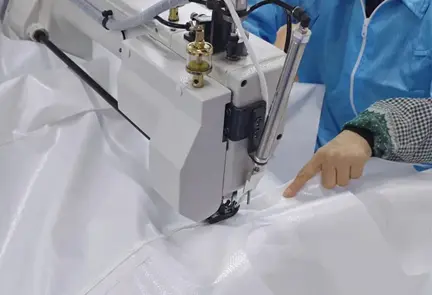
During production, all fabrics are trimmed using ultrasonic cutting technology. This effectively avoids the fraying, thread sheds, and dust issues caused by traditional hot-melt cutting blades.
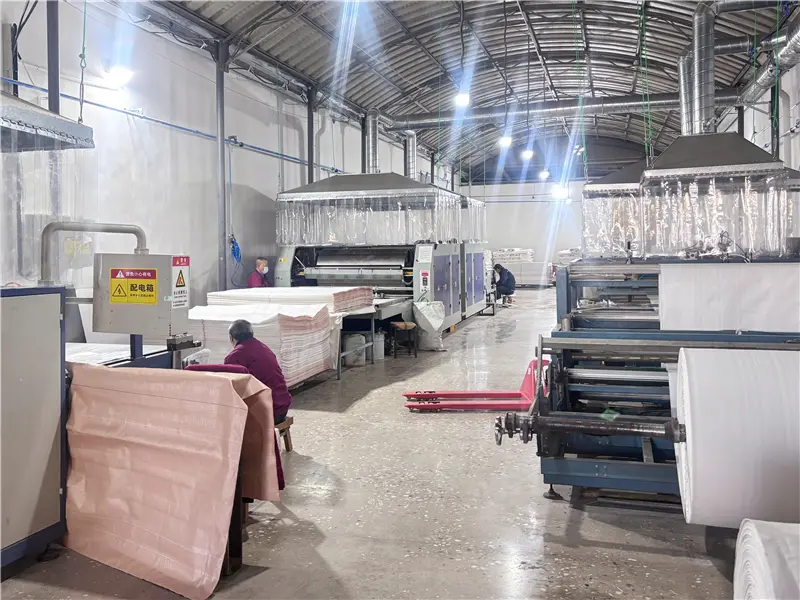
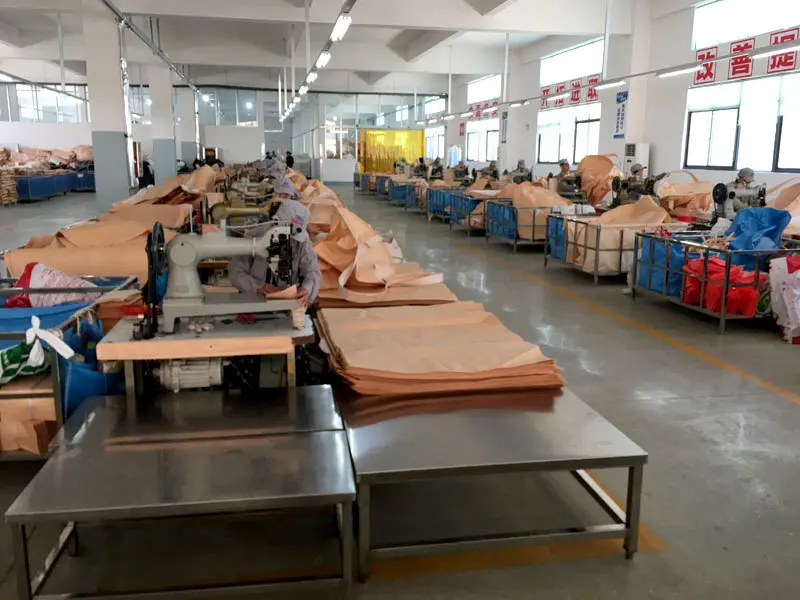
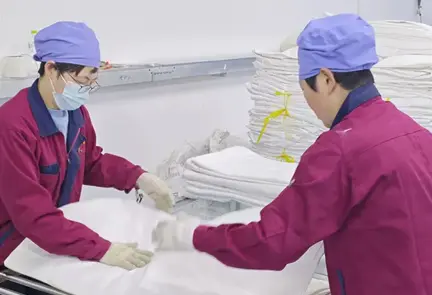
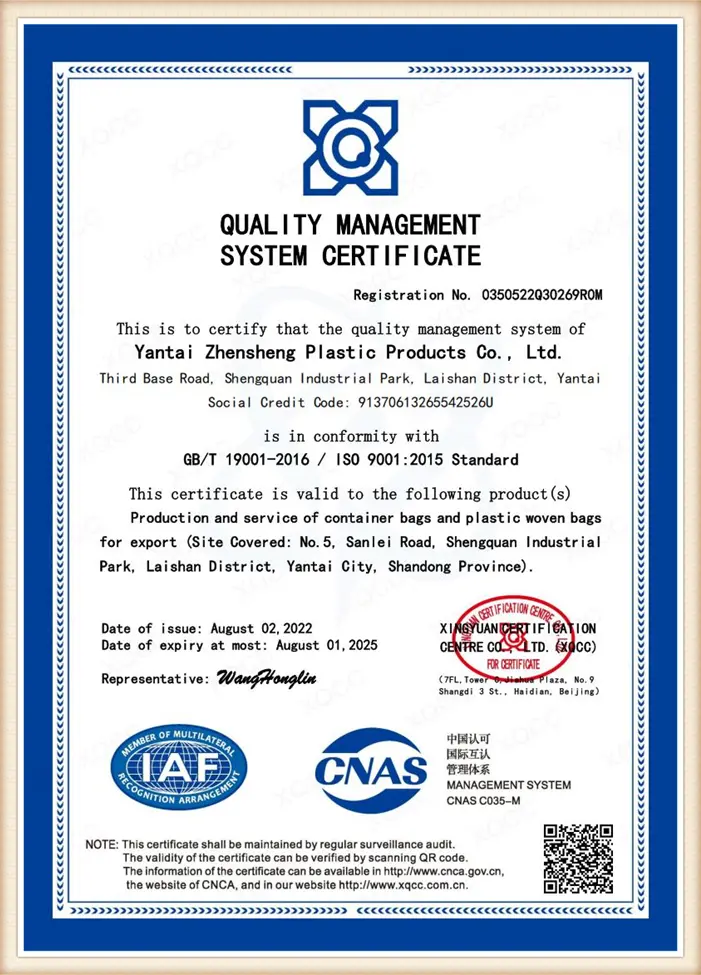
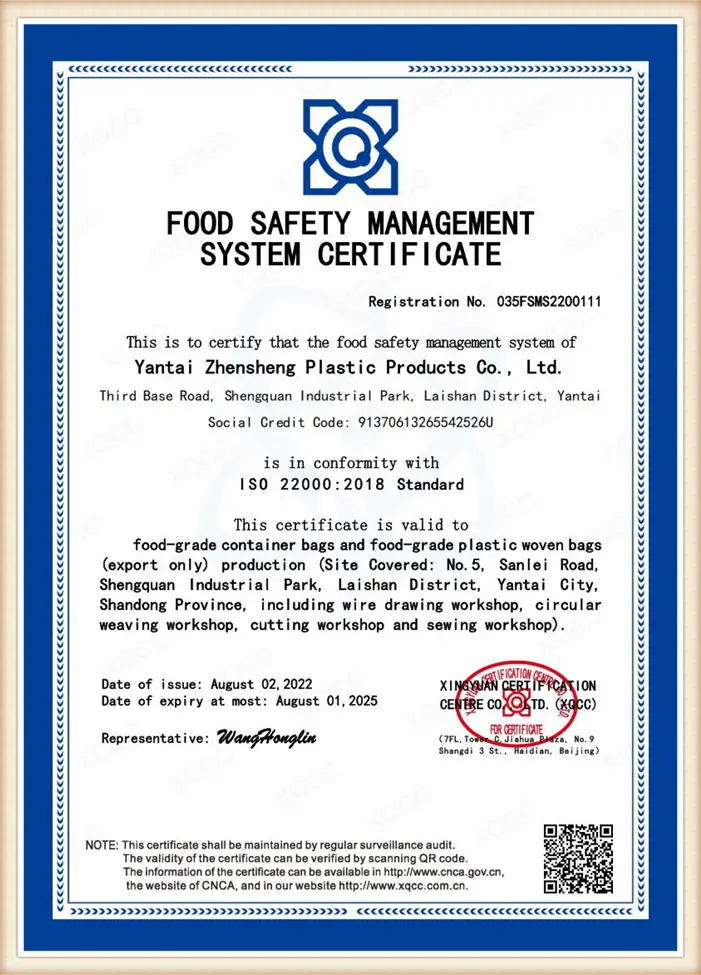
Our sewing processes for high-hygiene products are executed in a dust-free workshop meeting ISO 22000 Food Safety Management System requirements. Equipped with multi-stage air filtration and professional dust extraction installations, ZS Bulk Bags guarantees that every single unit is hygienic, static-tested, and clean.
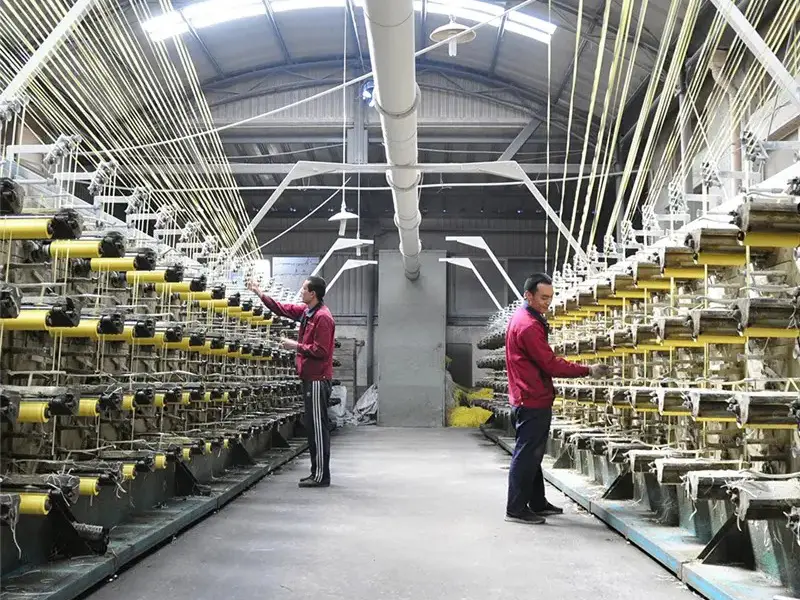
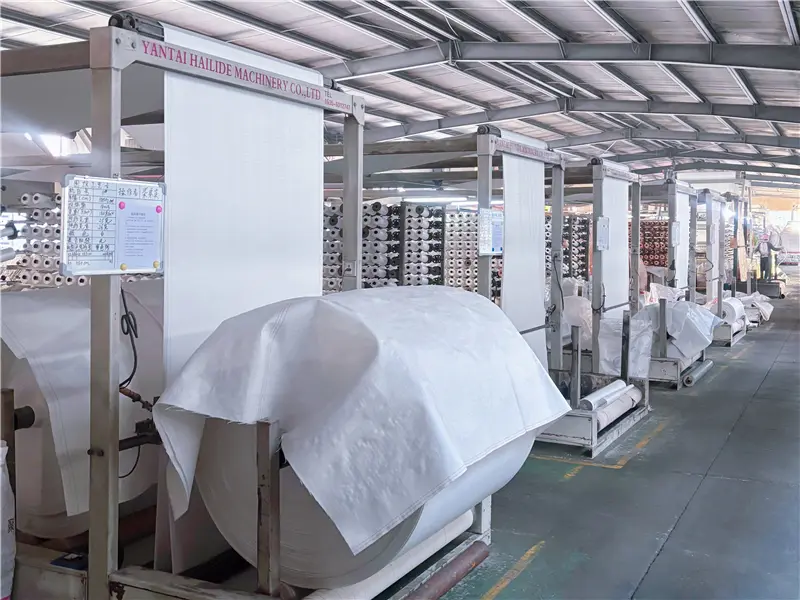
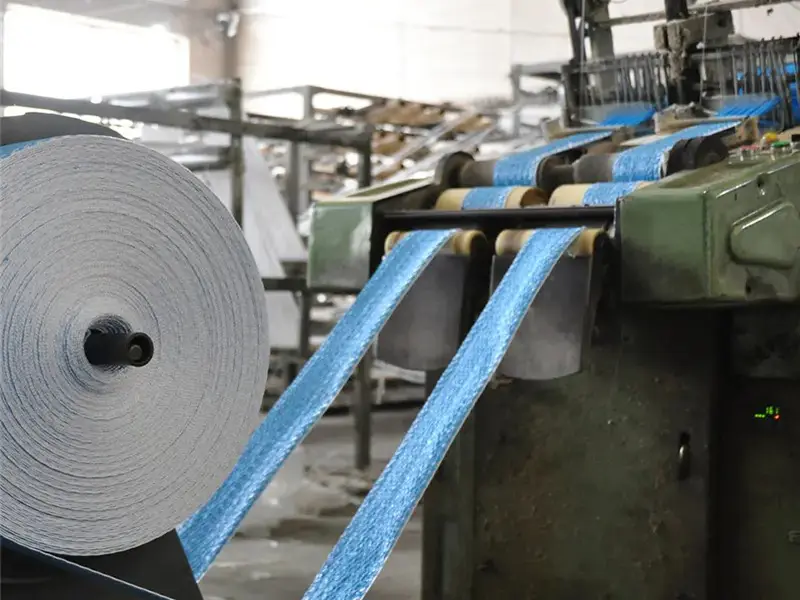
Extruding raw PP resin into high-tensile tapes with precise denier values.
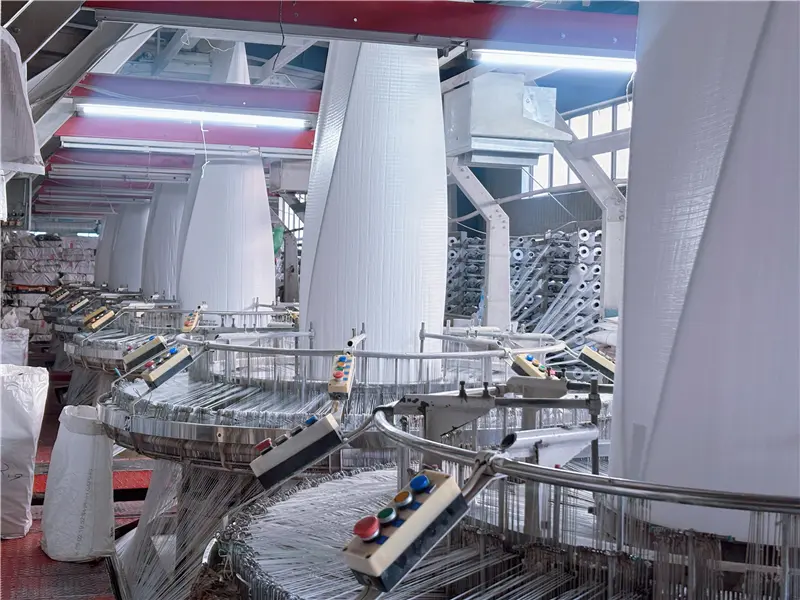
Circular loom weaving to construct fabric sheets with high burst-strength.
High-precision ultrasonic cutting machines cleanly divide panels to prevent loose threads.
Flexographic machinery prints safety warnings, corporate tracking codes, and operational guides.
Heavy-duty sewing stations unite panels, belts, and discharge nozzles under cleanroom parameters.
Inserting customized high-barrier aluminum foil or PE film liners for moisture protection.
Rigorous stress testing, static dissipation checks, and contamination scans for safety.
Compressing finished bags into ultra-tight bales for shipping container optimization.
Innovation directions driven by carbon reduction, smart sensors, and advanced circular materials.
We are researching eco-friendly alternatives utilizing bio-based PLA and PCR (Post-Consumer Recycled) PP polymers to assist multinational corporations in hitting scope 3 emissions reductions without sacrificing lifting strength.
Integrating passive RFID tags and localized sensor arrays into bulk bag lifters allows global distribution networks to trace origin batches, humidity thresholds, and transit acceleration levels in real time.
Developing modified polypropylene matrices that preserve their structural integrity up to 130°C, enabling companies to fill hot chemical powders directly at production terminals, eliminating bottleneck cool-down delays.
Our facilities are audited yearly by international institutions to ensure full compliance with health, environment, and industrial security regulations.
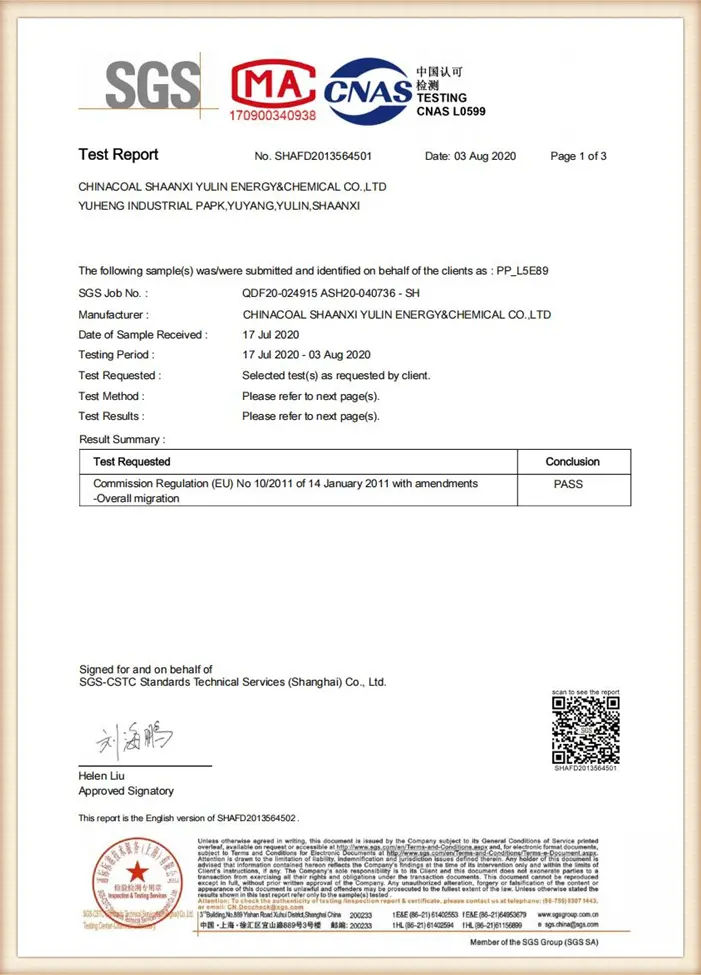
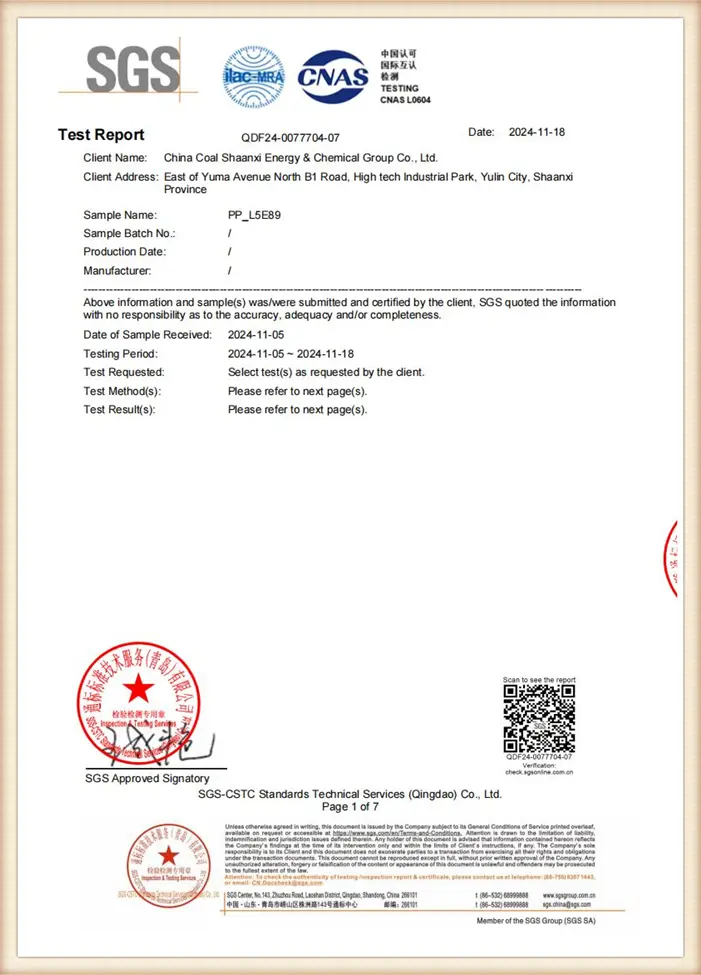
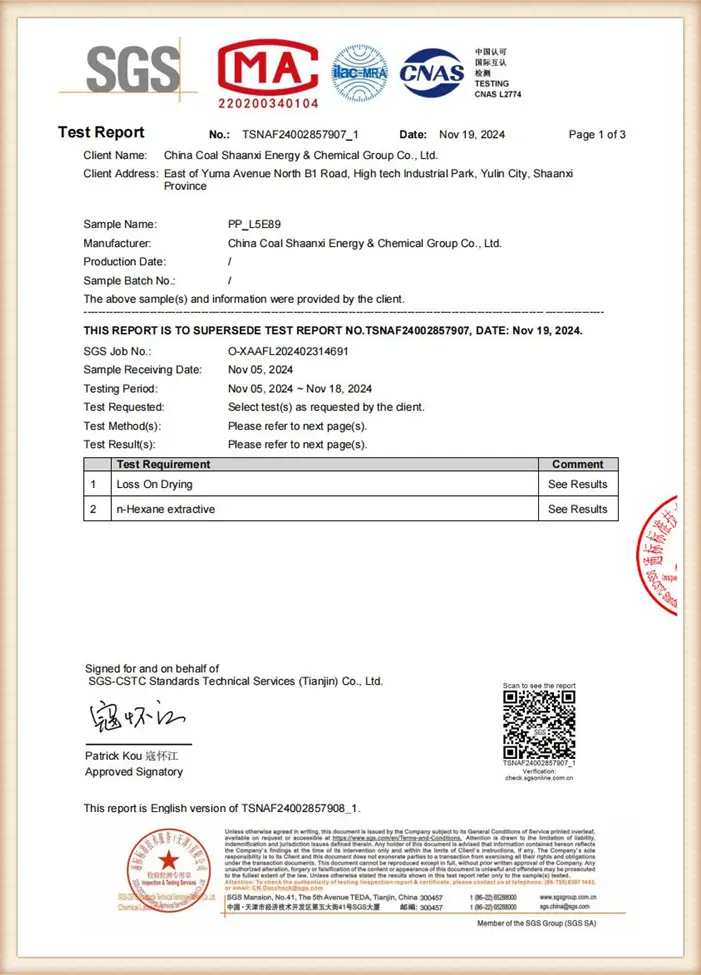
A visual overview of our extrusion, weaving, ultrasonic cutting, testing, and cleanroom packaging facilities in Yantai.
Engineered for safety, cost-reduction, and supply chain continuity in high-liability industrial sectors.
Handling chemicals that produce volatile dusts requires packaging that mitigates explosive spark risks. Our custom Type C Conductive FIBCs feature interconnected grounding structures that direct static charges directly to the earth. For operations without proper ground link points, we offer specialized anti-static fabric coatings that restrict dangerous electrical build-ups, compliant with standard IEC 61340-4-4 guidelines.
The manufacturing of lithium-ion batteries calls for clean packing solutions that are free of airborne particles. A single stray dust particle can render an entire batch of cathode precursors useless. Our cleanroom facilities employ dynamic air vacuums, ultrasonic heat sealing, and strict quality checks, delivering bulk bags that are completely contamination-free.
Traditional plastic woven containers are porous, allowing ambient air and humidity to seep in. For ingredients like pharmaceutical ingredients, dried food products, and sensitive chemicals, we design complex multi-layer foil liners that are integrated with barrier resins, effectively limiting moisture vapor and oxygen transmission rates.
Traditional flexible bags tend to round out under weight, resulting in dead cargo spaces and structural instabilities during shipment. Our baffle bag design uses internal fabric panels to retain a clean square shape when filled. This design optimizes transport container spaces by up to 30%, which significantly reduces overseas shipping expenditures.
Addressing the common questions raised by industrial compliance officers, supply chain leads, and sourcing experts.
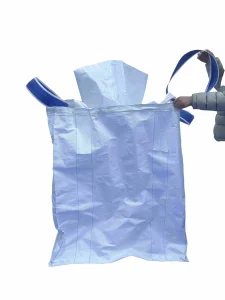
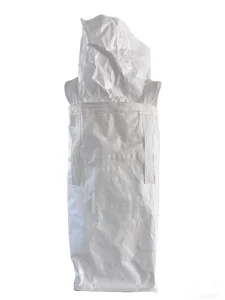
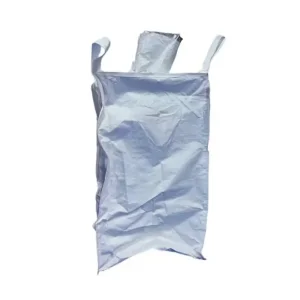
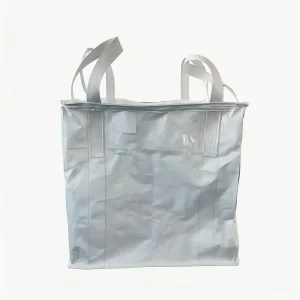
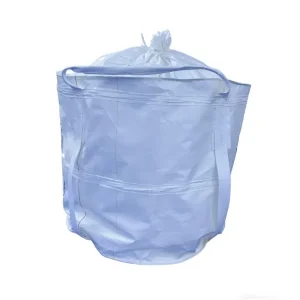
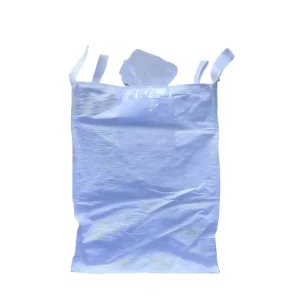
Premium FIBC units optimized for dust prevention, barrier performance, and safe heavy-lifting operations.
 Zhensheng