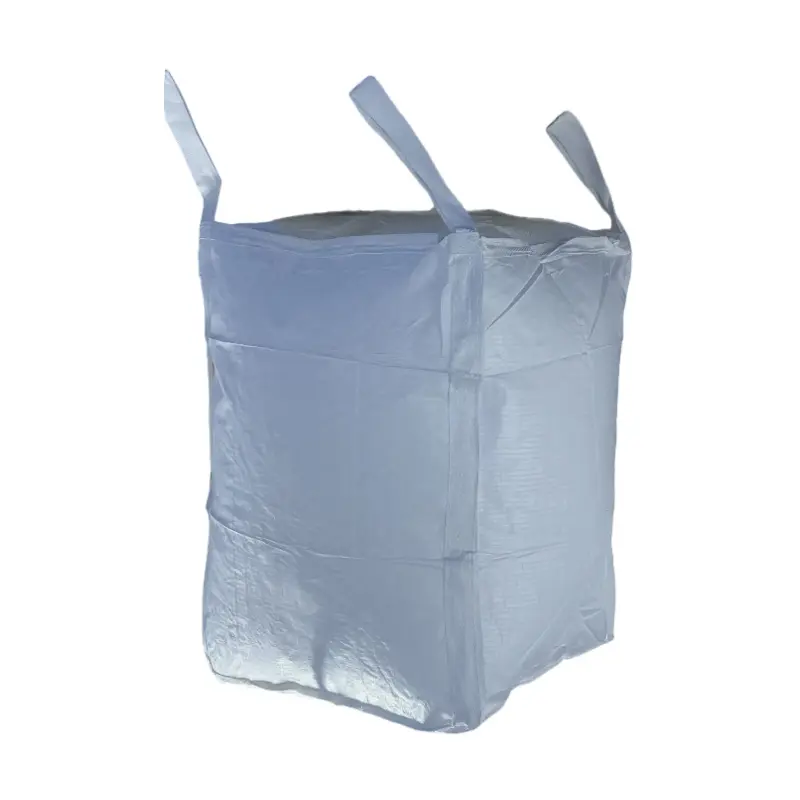
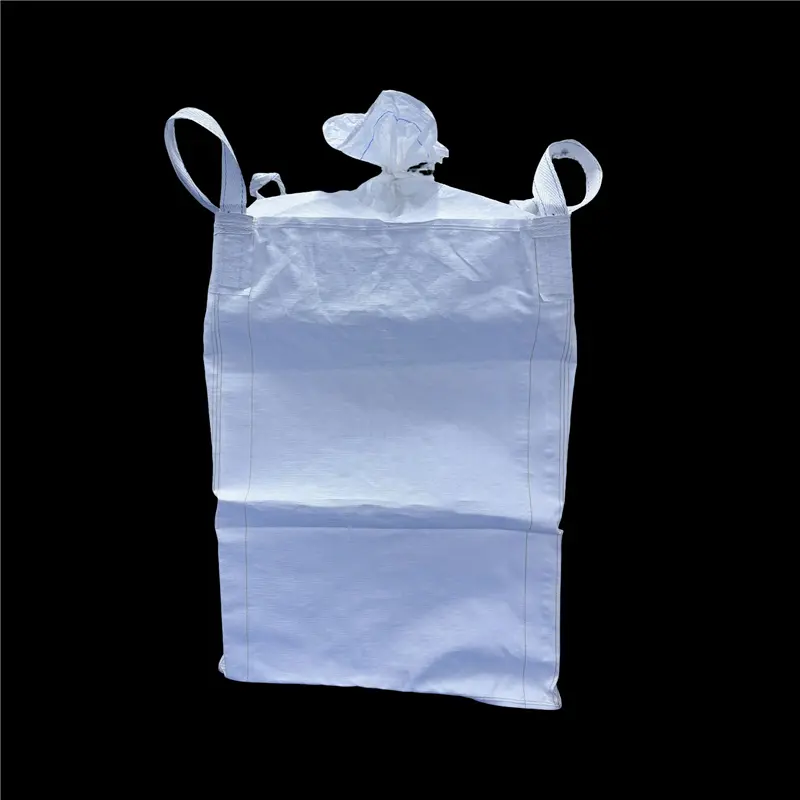
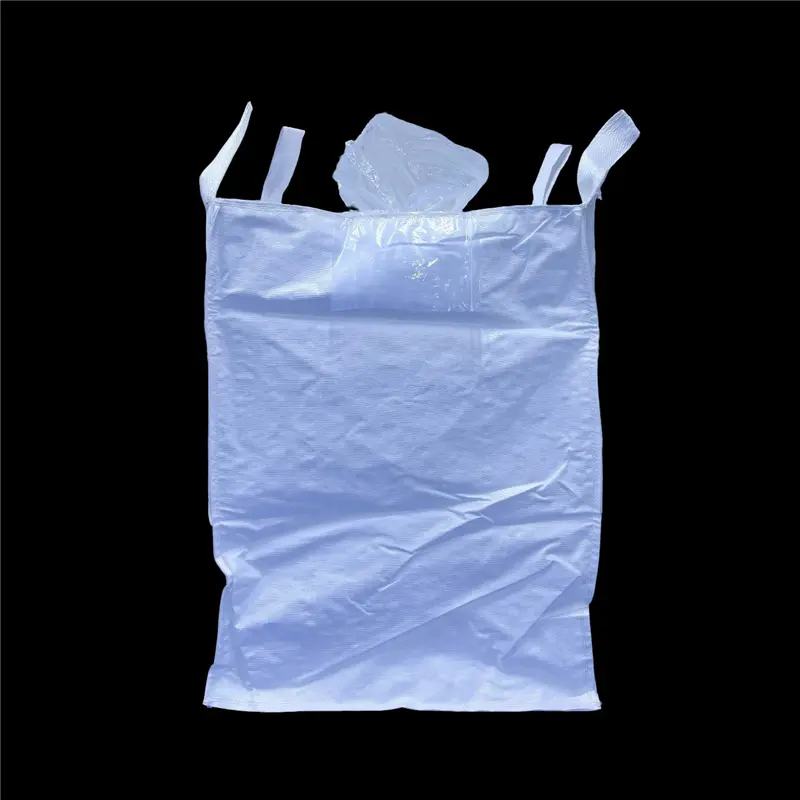
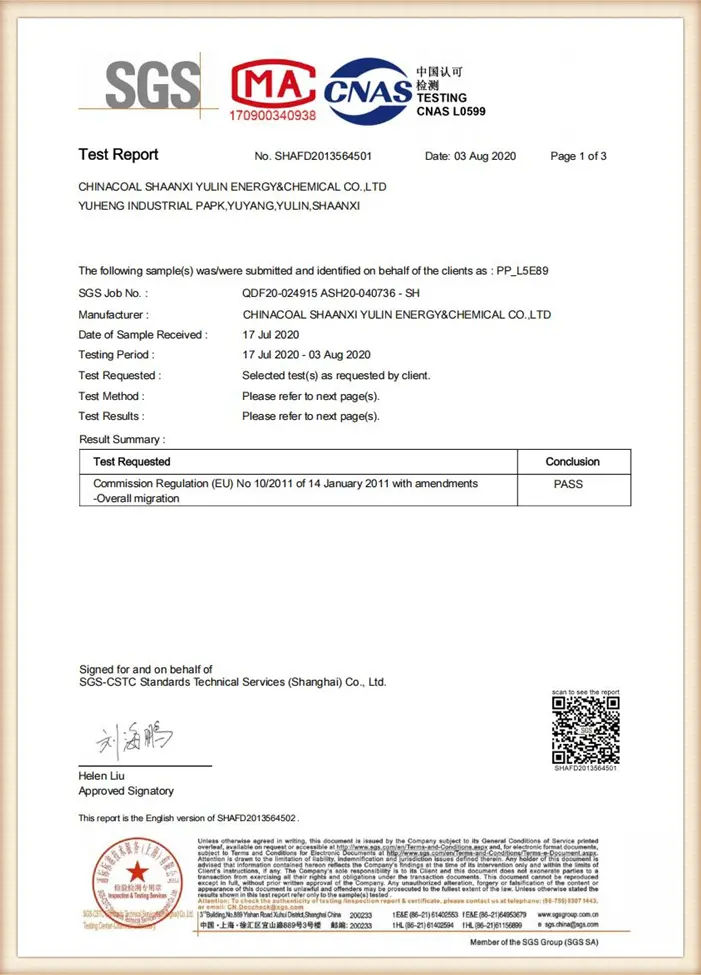
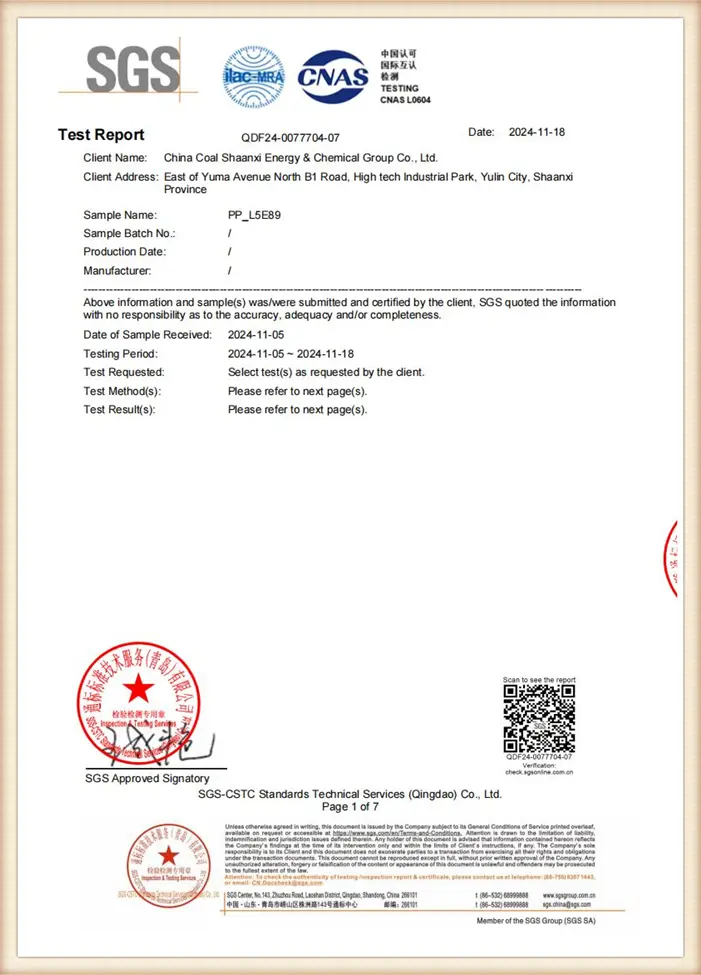
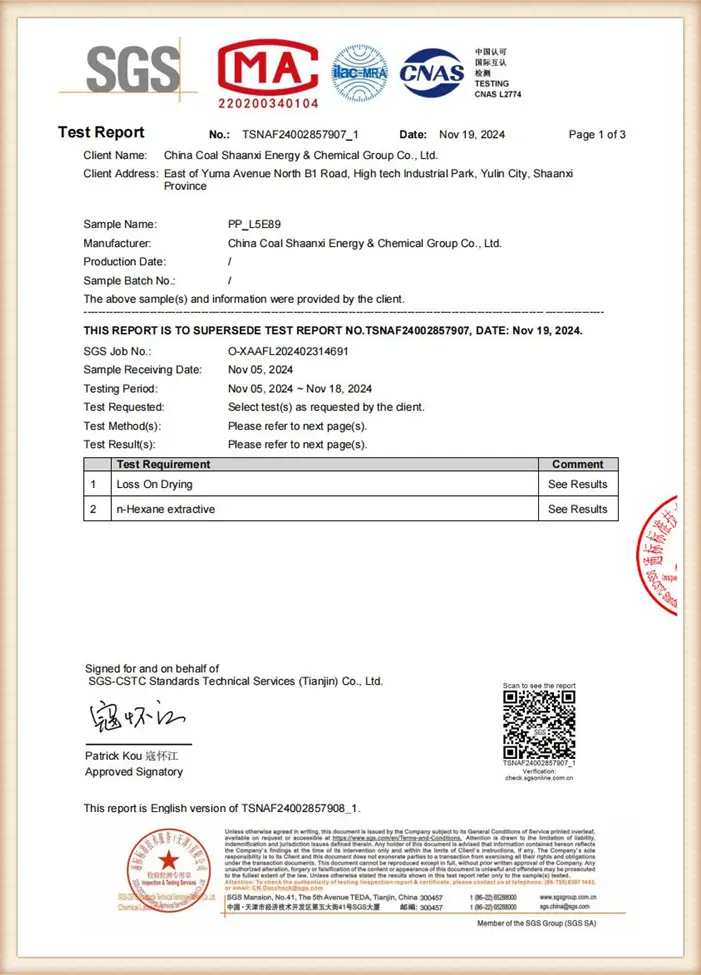
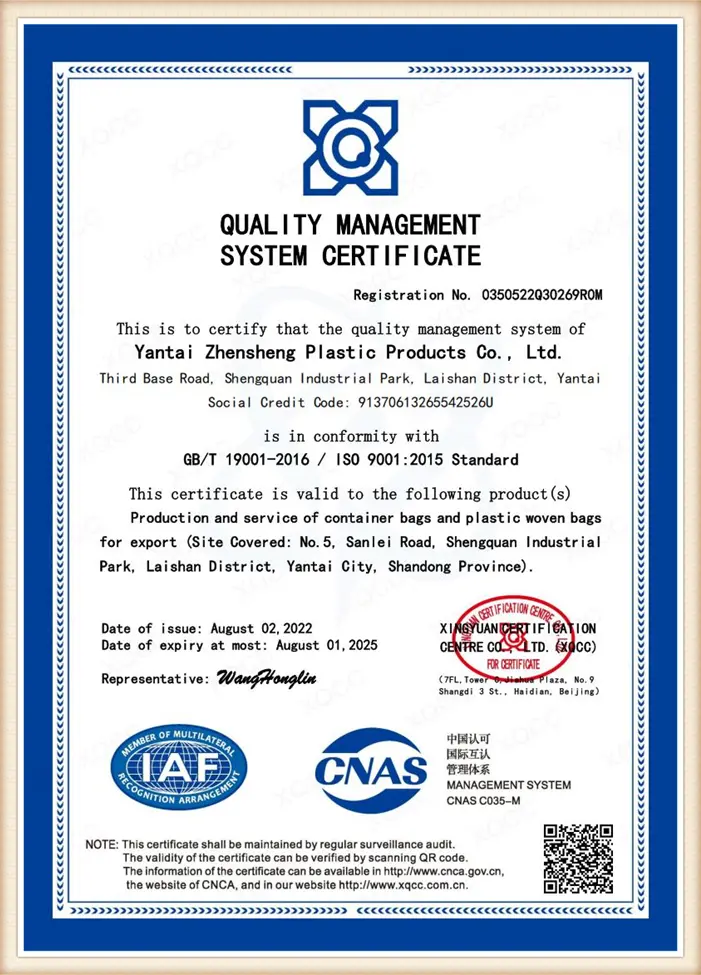
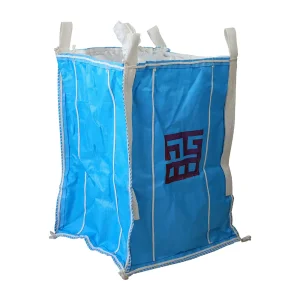
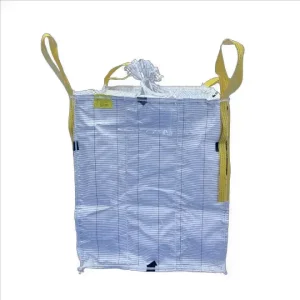
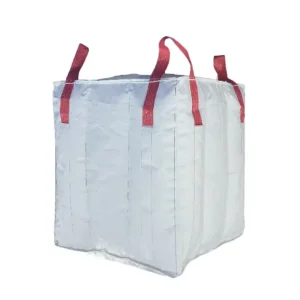
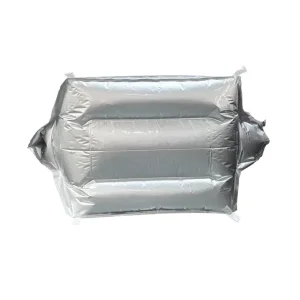
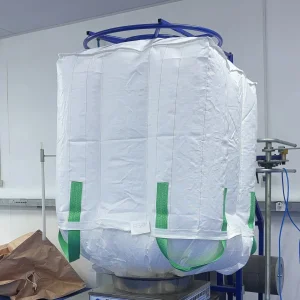
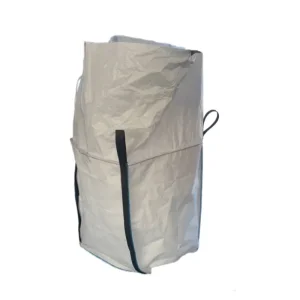
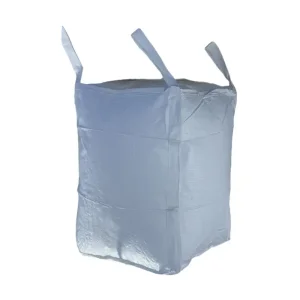
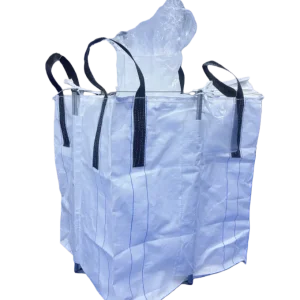
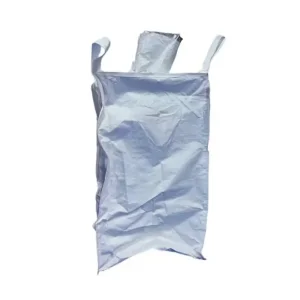
Chemical raw material FIBC is an industrial-grade bulk bag specially designed for packaging various chemical materials, with core advantages of strong corrosion resistance, sealing performance and safety. It is produced with high-strength polypropylene, polyethylene and other special base materials, and some special models are embedded with conductive fibers, reinforced coatings, etc., which can be customized according to the corrosiveness, flammability and explosiveness of chemical raw materials.
The product complies with the packaging safety standards of the chemical industry. Key characteristics include:
- Leak Resistance
- Anti-Static
- Moisture Resistance
- Wear Resistance
- Corrosion Resistance
- High-Strength Material
It can effectively isolate the impact of the external environment on the materials inside the bag, and avoid leakage, pollution or safety accidents during transportation and storage.
The size, style, color, load-bearing capacity, printed patterns, and other specifications of the FIBC can all be customized according to requirements.
Widely used in the packaging, storage, and long-distance transportation of various chemical raw materials, it is suitable for materials in multiple forms such as powder, granules, and lumps. The core application scenarios include:
Resins & Pigments
Dyes & Additives
Asphalt Particles
Petrochemical Intermediates
Fertilizers
Pesticide Materials
Rubber Raw Materials
Plastic Pellets
Industrial Salt
This versatile FIBC is engineered to provide reliable protection and secure handling across diverse industrial environments, ensuring both safety and efficiency throughout the supply chain.
Frequently Asked Questions
Q
What materials are used to manufacture Chemical Raw Material FIBC bags?
Chemical Raw Material FIBC bags are primarily produced using high-strength polypropylene (PP) and polyethylene (PE) as base materials. Special models may also incorporate conductive fibers for anti-static performance and reinforced coatings to enhance chemical resistance, depending on the specific requirements of the chemical being stored or transported.
Q
Can Chemical FIBC bags be customized for specific chemical products?
Yes, absolutely. The size, style, color, load-bearing capacity, and printed patterns can all be fully customized to meet your specific requirements. Customization also extends to features such as anti-static properties, moisture barriers, and reinforced coatings based on the corrosiveness, flammability, or explosiveness of the chemical raw materials being handled.
Q
What types of chemical materials are suitable for packaging in these FIBC bags?
These FIBC bags are suitable for a wide range of chemical materials in powder, granule, and lump forms. Common applications include resins, pigments, dyes, chemical additives, asphalt particles, petrochemical intermediates, fertilizers, pesticide technical materials, rubber raw materials, plastic pellets, and industrial salt.
Q
Are these FIBC bags compliant with international chemical packaging safety standards?
Yes. Chemical Raw Material FIBC bags are designed and produced in compliance with chemical industry packaging safety standards. They feature key safety characteristics including leak resistance, anti-static protection, moisture resistance, and wear resistance to ensure safe handling, storage, and transportation of chemical raw materials.
Q
How do Chemical FIBC bags prevent contamination or safety accidents during transportation?
The bags are engineered to effectively isolate the contents from external environmental factors. Their leak-resistant construction prevents spillage, while anti-static properties reduce the risk of electrostatic discharge with flammable materials. The moisture-resistant and wear-resistant features further protect the chemical contents from degradation or exposure during long-distance transportation and extended storage.
Q
What industries commonly use Chemical Raw Material FIBC bags?
Chemical Raw Material FIBC bags are widely adopted across multiple industries, including the fine chemical sector (resins, pigments, dyes), the petrochemical industry (asphalt particles, intermediates), the agrochemical field (fertilizers, pesticides), and general industrial manufacturing (rubber, plastics, industrial salt). They are a reliable packaging solution for any industry that requires safe and efficient bulk chemical handling throughout the supply chain.
 Zhensheng