How to Find a Reliable FIBC Bag OEM in China?

Time:2026-10-31 Author:Sienna
0%

Choosing a Fibc Bag Oem China partner is not a price-comparison exercise. It is a check on whether the factory can repeat the same safe, documented result across every production run. A sample may look tidy on a showroom table. The real test comes later: consistent fabric weight, secure seams, clear batch records, and reliable delivery dates.

The World Bank’s Logistics Performance Index 2023 covers 139 economies, offering useful context for comparing transport and supply-chain conditions. It is not an FIBC-specific study, so it cannot verify a supplier’s production quality. For bag specifications, ISO 21898:2004 sets requirements for FIBCs used with non-dangerous goods. Ask suppliers to connect their test records and inspection procedures to the exact bag design you plan to order. Small details matter. Check lifting loops, liner fit, printing, and how rejected bags are handled. A polished audit can still miss a weak process.

I cannot responsibly attribute a quotation to a named FIBC-industry expert without a verifiable source. That gap matters. Before publishing supplier claims, request traceable test evidence, current certifications, and references for comparable orders. Then verify them independently. A low quote may be attractive, but it is not proof of dependable manufacturing. The questions in this guide help buyers assess what the factory can demonstrate—and what still needs closer inspection.
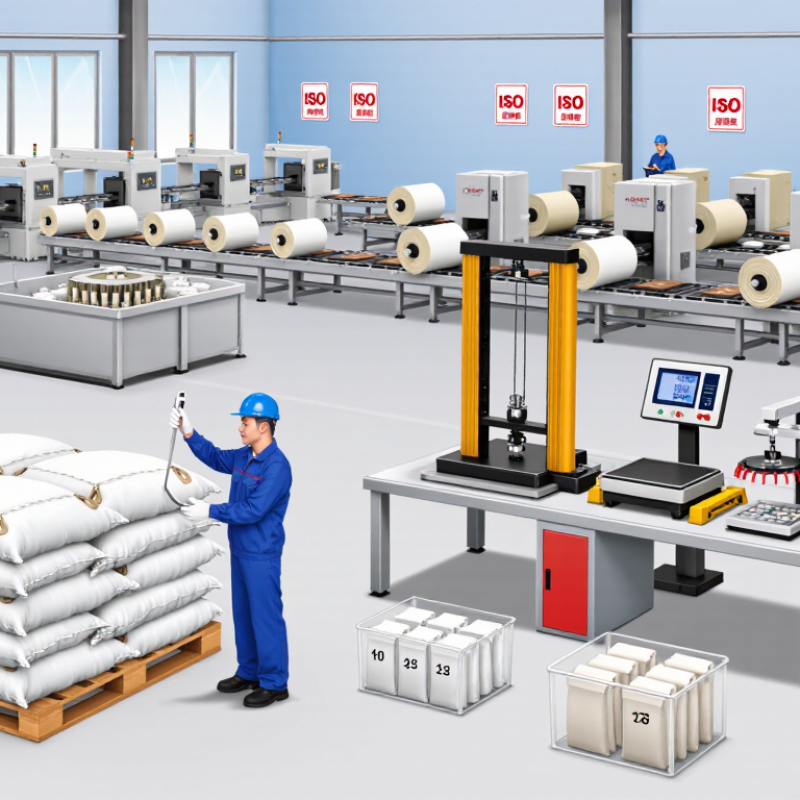
How to Find a Reliable FIBC Bag OEM in China?

Define Your FIBC Requirements and Compliance Standards

Before contacting an FIBC OEM, define what the bag must carry and how it will be handled. Record the product’s weight, bulk density, flow behavior, and filling temperature. Specify dimensions, safe working load, lifting-loop arrangement, discharge type, and whether a liner or coating is needed. A fine powder may require a different fabric and closure than coarse granules. Small details matter.

Set compliance requirements for the destination market and the bag’s intended use. Ask which current standards and tests apply, then request relevant test reports and certificates for the proposed construction. Check that documents match the fabric, seams, loops, and liner being quoted—not just a similar bag. Confirm traceability, production checks, and how changes to materials are controlled. Keep records.

A practical evaluation includes a physical sample. Measure it, inspect stitching and loop placement, and test the filling and discharge process with your own equipment where possible. I have seen specifications focus heavily on fabric weight while overlooking outlet dimensions; that can create avoidable delays. It is also easy to assume a certificate covers every configuration. It may not. Ask the OEM to clarify any gaps in writing before approving production.

Shortlist Chinese OEMs With Relevant Product Experience

Shortlist Chinese OEMs by product experience, not catalog size. Ask for three recent projects matching your bag’s construction: U-panel, circular, baffle, coated, or lined. Similar bags can perform differently during filling, stacking, and discharge. Request dated production photos, drawings, and anonymized inspection records. Small details matter.

Compare test records with ISO 21898, which specifies a 5:1 safety factor for single-trip FIBCs and 6:1 for multi-trip FIBCs. Ask whether the tested sample matches your quoted design and safe working load. Check lifting-loop construction, seam strength, liner fit, and inspection frequency. Ask how many bags of that exact type the factory makes each month. A supplier may be skilled in woven fabric but less experienced with baffles or liners. That distinction is easy to miss. Paperwork can look tidy; verify it against a sample and a live production check.

Verify Factory Credentials, Quality Systems, and Production Capacity

How to Find a Reliable FIBC Bag OEM in China?
Verify Factory Credentials, Quality Systems, and Production Capacity

A dependable supplier should be able to show current business and factory documents that match its operating address and manufacturing scope. Ask whether production happens on-site or through subcontractors. Paper is not proof. Compare the documents with a live factory visit or video tour, and look for actual cutting, sewing, and inspection areas.

Review the quality system in practice, not only by its certificate. Request sample inspection records, material specifications, and traceability details for a recent production batch. For example, check how staff record fabric weight, seam strength, dimensions, and test results. Ask what happens when a product fails inspection. A clear, dated corrective-action record is more useful than a polished presentation. Small gaps can still appear; note them and ask how they are handled.

Production capacity needs evidence too. Check machine numbers, staffing, working shifts, and recent output for products similar to yours. Ask how the factory manages busy periods and whether it can maintain the same inspection steps during peak orders. A trial order can reveal sewing consistency, packaging quality, and communication speed. It will not prove every future batch will be identical. Compare trial results with the agreed specifications, then discuss any differences before placing a larger order.

How to Find a Reliable FIBC Bag OEM in China?

Verify factory credentials, quality systems, and production capacity.

ISO 21898 specifies design safety factors commonly expressed as 5:1 for single-trip FIBCs and 6:1 for multi-trip FIBCs. When assessing an OEM, request current test reports and confirm that the bag’s intended use and design match the applicable requirements.

Assess Samples, Testing Methods, and Customization Capabilities

When evaluating a FIBC OEM, request a sample made with the same fabric, seams, and lifting loops proposed for production. Check fabric weight, stitching consistency, loop placement, and the finish around filling and discharge spouts. Small details matter. A clean-looking bag is not proof of consistent manufacturing.

Ask for test records that identify the sample or production batch, test method, and results. Depending on the bag’s intended use, relevant checks may include safe working load, top-lift performance, drop resistance, and UV exposure. Confirm that the test conditions match your handling needs; a result from a different construction may not tell you much. I would not treat one sample as proof. Testing takes time, and a supplier’s explanation should be clear enough to verify.

Customization is more than adding a logo. Discuss dimensions, loop length, liner fit, coating, filling and discharge openings, and printing legibility. Ask the OEM to provide a drawing or specification sheet before approving changes. Then inspect a revised sample, especially where the liner meets the spout and where seams carry weight. Some details may still be missed on the first round. That is worth reviewing openly, rather than assuming the sample is perfect.

Review Pricing, Contract Terms, and Ongoing Quality Support

Compare FIBC bag quotes on equal specifications, not just unit price. State the bag’s dimensions, fabric weight, safe working load, safety factor, liner, printing, and required tests. Ask whether the price includes samples, packaging, inspection, and delivery to your chosen port. A low quote can exclude details that later appear as extra charges. Cheap is not clear.

Read the contract before paying a deposit. It should identify the approved sample, material specifications, order quantity, production timeline, payment milestones, and remedies for defects or delays. Confirm how changes are approved and recorded. If a clause feels vague, ask for plain wording; do not rely on verbal promises. Specify who pays for repeat testing or replacement bags when results miss agreed limits. These details may seem tedious, but they matter when a shipment is already packed.

Ongoing quality support is part of the purchase. Request a production inspection plan, test records, and a named contact for complaints. For example, agree on checks for dimensions, stitching, lifting loops, and fabric weight. Ask how the supplier investigates a failed inspection and reports corrective actions. Do not assume every factory handles problems the same way. A practical point to revisit: even a clear contract cannot prevent every production mistake, so response time and traceable records deserve attention too.

How to Find a Reliable FIBC Bag OEM in China? — Review Pricing, Contract Terms, and Ongoing Quality Support

Use these benchmarks to compare quotations and verify supplier claims. Price ranges are indicative planning estimates only; actual quotations depend on bag specifications, order quantity, testing, packaging, and trade terms. Confirm current prices and compliance requirements directly with each shortlisted supplier.

Review Area Data Point Practical Benchmark or Check Contract Evidence Ongoing Support
Pricing Standard 1-ton FIBC bag As a broad budgeting reference, a basic, uncoated polypropylene bag may be quoted at approximately US$2–6 per bag for larger production runs. Size, safe working load, fabric weight, lifting loops, printing, and order quantity can change the price substantially. Require a line-item quotation stating bag dimensions, fabric specification, SWL, safety factor, liner or coating, printing, quantity, packaging, currency, and Incoterm. Request written notice and approval before any material or specification change that affects price or performance.
Pricing Special features and testing Food-contact requirements, conductive or antistatic designs, liners, sift-proof seams, and documented testing can increase cost. Compare like-for-like specifications rather than relying on a single unit price. List each optional feature, test, certificate, and associated charge separately. State whether samples and testing fees are refundable or included in the order. Keep approved samples and test records as references for repeat orders.
Contract Terms Specification and approval Define measurable requirements, including dimensions and tolerances, fabric weight, SWL, safety factor, seam construction, lifting-loop details, liner requirements, and printing artwork. Attach a signed technical specification and approved pre-production sample or drawing to the purchase contract. Use a documented change-control process for revisions to materials, construction, artwork, or production site.
Contract Terms Delivery and payment Compare the same delivery basis and shipment scope. Confirm production lead time, inspection window, packing method, shipping marks, and the point at which delivery risk transfers under the agreed Incoterm. State the Incoterm version and named place, shipment schedule, payment milestones, late-delivery remedies, and document requirements. Agree on a named contact and a written process for shipment updates and schedule changes.
Quality Control Pre-shipment inspection Set an inspection plan covering workmanship, dimensions, labeling, quantity, packaging, and any required load or safety tests. Define the sampling method and pass/fail limits before production. Specify inspection rights, test methods, acceptance criteria, and what happens if a lot fails inspection. Retain inspection reports, test results, lot identification, and approved reference samples for traceability.
Quality Control Testing and compliance documents Match test documentation to the bag’s intended use and destination-market rules. Ask for reports that identify the tested construction and sample; verify report validity with the issuing laboratory where appropriate. Identify required test standards, report format, certificate scope, and responsibility for maintaining or renewing documents. Request advance notice if test results, materials, or applicable compliance documentation change.
Supplier Due Diligence Manufacturing capability Confirm which operations are performed at the proposed production site, such as weaving, coating, cutting, sewing, printing, and inspection. A video call or site audit can help verify the stated process. Record the production site, approved subcontracting rules, and the supplier’s obligation to disclose changes in manufacturing location. Review production capacity and quality performance before placing repeat or peak-season orders.
Ongoing Support Nonconformance and corrective action Agree on a practical process for reporting defects, documenting affected lots, investigating root causes, and implementing corrective and preventive actions. Define claim deadlines, evidence requirements, response times, replacement or credit options, and responsibility for verified defects. Track recurring defect types and corrective-action closure across orders; request written updates for unresolved issues.
Comparison Quote normalization Compare at least three quotations using the same specification, quantity, packaging, inspection scope, payment terms, and Incoterm. A low unit price may exclude important features or costs. Keep a quotation comparison sheet and make the final technical and commercial terms consistent with the purchase order. Review total landed cost, defect rates, delivery performance, and response quality after each order.

FAQS

What details should I define before contacting an FIBC manufacturer?

Record the product’s weight, bulk density, flow behavior, and filling temperature. Specify bag dimensions, safe working load, lifting loops, and discharge type. Note whether you need a liner or coating. Small details matter.

Why do product properties affect bag design?

Fine powder may need different fabric and closures than coarse granules. The filling temperature and flow behavior can also affect material choices. One specification rarely fits every product.

How can I check whether compliance documents match my bag?

Request current test reports and certificates for the proposed construction. Compare them with the quoted fabric, seams, loops, and liner. Ask about gaps in writing. Keep records.

What should I inspect on a physical sample?

Measure the bag and check its stitching and loop placement. Test filling and discharge with your own equipment where possible. I might overlook an outlet detail without a real sample.

How can I verify a factory’s credentials?

Check that its business and factory documents match its address and manufacturing scope. Ask whether production is on-site or subcontracted. Paper is not proof.

What should I look for during a factory visit or video tour?

Look for active cutting, sewing, and inspection areas. Ask to see recent inspection records and material specifications. A polished presentation alone tells you little.

How can I assess a factory’s quality system?

Ask how staff record fabric weight, seam strength, dimensions, and test results. Request a dated corrective-action record for a failed inspection. Small gaps can remain.

How can I judge production capacity before placing a large order?

Check machine numbers, staffing, shifts, and recent output for similar bags. Ask how inspections continue during busy periods. A trial order can reveal consistency, packaging, and communication speed, but it cannot guarantee every future batch.

Conclusion

Finding a reliable Fibc Bag Oem China partner starts with clearly defining your bag’s intended use, dimensions, load requirements, fabric specifications, and applicable compliance standards. With these details in hand, you can shortlist manufacturers whose product experience matches your needs, then verify their factory credentials, quality management practices, equipment, and ability to meet your expected production volume and schedule.

Before placing an order, review samples and ask how materials and finished bags are inspected and tested. Discuss customization options, such as printing, liners, lifting loops, and closures, and confirm that agreed specifications can be maintained across production runs. Compare quotations alongside payment terms, lead times, and quality support—not price alone. A clear contract, documented acceptance criteria, and a practical process for addressing quality concerns can help build a dependable, long-term supplier relationship.

Sienna

Sienna

Sienna is a skilled marketing professional with a deep expertise in our company’s core products and services. With a passion for innovation and detail, she plays a pivotal role in crafting insightful blog posts that not only highlight the unique features of our offerings but also provide valuable......