Top FIBC Factory China How to Choose a Reliable Supplier?

Time:2026-11-07 Author:Sienna
0%

Choosing a dependable Fibc Factory China supplier can affect product consistency, delivery schedules, and long-term costs. A low quote alone reveals little about material quality or inspection practices. A practical review should consider the factory’s experience with your bag type, required load capacity, liner options, lifting loops, and printing needs. Small details matter. Ask how the supplier checks incoming polypropylene yarn, stitching, and finished bags. Request current specifications, relevant test records, and a sample made to your requirements. Photographs are not enough.

Look beyond the sample. Ask about production capacity, lead times, quality-control steps, and how defects are handled. Clear answers matter. Confirm that order details, packaging, and shipping documents match your needs before production begins. If possible, arrange a factory visit or an independent inspection. Check whether the sales contact can explain technical questions directly, rather than offering only broad promises. A polished website proves little. Even a careful review has limits: one sample cannot represent every production run, and a checklist cannot replace ongoing communication. The goal is not to find a perfect supplier, but to gather enough specific, verifiable information to make a confident choice.
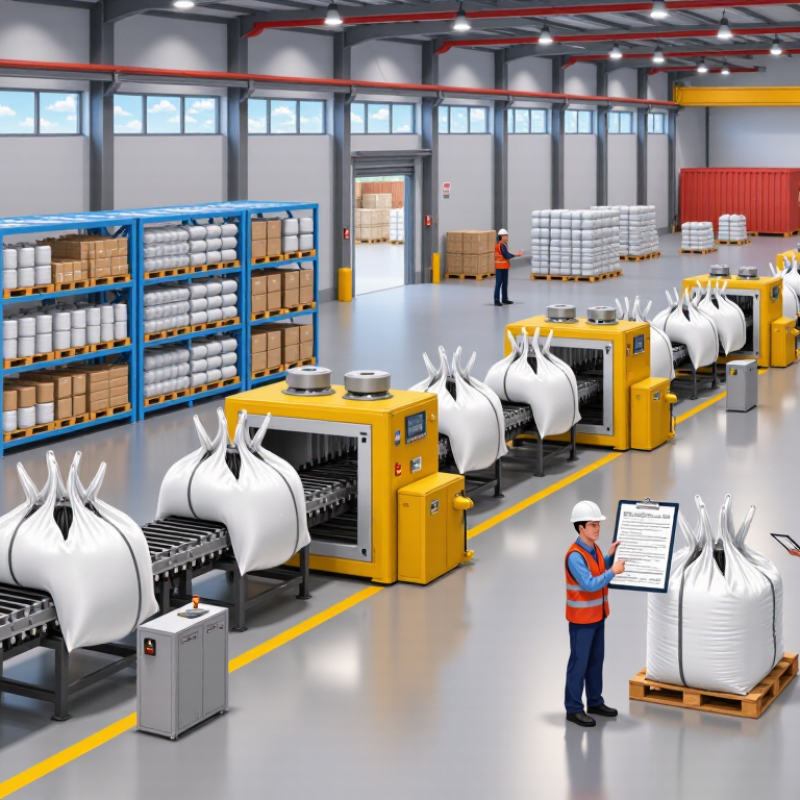
Top FIBC Factory China How to Choose a Reliable Supplier?

Define Your FIBC Requirements and Application

Before comparing factories, define the material, filled weight, filling method, discharge method, and storage conditions. A 1,000-kilogram load of dry resin behaves differently from fine powder that traps air or shifts during transport. Note whether the bag needs a liner, coated fabric, specific lifting loops, or a particular filling and discharge spout.

Details matter. Measure the pallet and warehouse clearance too; a bag that fits the product may still snag on a rack.

FIBCA technical guidance gives a typical FIBC safe working load range of 500 to 4,000 pounds, with safety factors commonly set at 5:1 for single-trip bags and 6:1 for reusable bags. These are reference points, not a substitute for testing the finished design against your handling conditions.

Specify whether the bag will be lifted by forklift, crane, or both. I still see buyers understate repeated handling; it can change fabric, seam, and loop requirements.

The application also determines cleanliness and performance needs. Food or pharmaceutical contact may require documented material controls and traceability, while outdoor storage may call for UV protection.

Grand View Research estimated the global FIBC market at USD 6.8 billion in 2023, reflecting a broad range of uses and specifications.

Ask suppliers for drawings, test records, and samples matched to your actual filling line. A sample trial can expose a poor fit before a full production run.

Check the Factory’s Production Capacity and Expertise

A reliable FIBC supplier should show what its factory can produce on an ordinary working day, not only during a polished tour. Ask how many bags it makes monthly, which shifts are running, and where sewing, printing, and inspection happen. Compare that capacity with your order volume and delivery schedule. A large number means little if one sewing line is already overloaded. Look at work-in-progress, machine condition, and how operators handle rejected seams. Ask to see records from a recent production run. They can reveal more than a brochure.

Expertise matters just as much as output. Discuss fabric weight, bag dimensions, lifting loops, liner options, and the intended load. A capable team should explain its choices clearly and flag design trade-offs before sampling. Request a sample made to your specification, then check stitching, measurements, and print placement. Ask how the factory tests samples and tracks production defects. Specific answers are reassuring. Vague promises are not. A factory may have strong equipment yet weak process control; that is easy to miss on a short visit. Request evidence, and leave room for uncertainty.

Verify Quality Standards, Testing, and Certifications

When evaluating a FIBC factory in China, treat quality documents as evidence to verify, not decoration. Ask which standards apply to the bag’s intended load, filling method, and handling conditions. Request current certificates and check the issuing body, expiry date, and product scope. A certificate for a different bag design may not cover your order. Look closely.

Ask for test reports that identify the tested model, date, method, and results. Depending on the specification, checks may include lifting performance, seam strength, fabric properties, and repeated handling. Compare reports with a production sample: inspect the stitching, lifting loops, and printed labels. Small differences matter. Confirm how the factory records batches and handles failed checks. If a report is unclear, ask for a witnessed test or independent verification. That takes time, but assumptions can cost more. A tidy certificate folder is reassuring, yet it cannot replace consistent inspection. Suppliers may not document every detail perfectly; gaps deserve questions, not automatic rejection. Judge whether answers are specific, traceable, and consistent with the bag you will receive.

Compare Pricing, Lead Times, and Export Services

Top FIBC Factory China: How to Choose a Reliable Supplier?
Compare Pricing, Lead Times, and Export Services

A low unit price can hide costs for printing, liners, lifting loops, or inspection. Ask each factory to quote the same specifications, including bag dimensions, fabric weight, safe working load, and order quantity. Cheap is not always cheaper. Request a production sample and check its stitching, seams, and dimensions against your needs. One detail I would revisit is how clearly suppliers define acceptable tolerances; vague answers can create trouble later.

Lead times deserve the same scrutiny as pricing. Ask for separate estimates for sampling, production, and shipping, then confirm what could delay each stage. A factory’s schedule is only useful if updates are timely. Delays happen. For export service, check whether the supplier can prepare packing lists, confirm packaging methods, and coordinate shipment details with your freight partner. Ask who handles questions if documents or loading dates change. A polished quotation is helpful, but responsive communication during a real order is better evidence.

Tips: Compare like-for-like quotations, not just totals. Keep approved samples and specifications in writing. Ask for recent quality records relevant to your bag type, and verify that export arrangements match your destination and delivery plan. A small trial order may reveal issues that a sales call cannot.

Top FIBC Factory China: How to Choose a Reliable Supplier? Compare Pricing, Lead Times, and Export Services

Supplier Profile Indicative FOB Price per Bag Typical MOQ Sample Lead Time Bulk Production Lead Time Export Services to Confirm Best Fit Key Checks Before Ordering
Large, vertically integrated FIBC factory US$2.80–4.50 1,000–3,000 bags 7–12 days 25–40 days after sample approval and deposit Export packing, commercial invoice, packing list, and coordination with the buyer’s nominated forwarder; confirm whether customs documentation is included. Repeat orders, larger volumes, and buyers needing consistent production capacity. Check production capacity, fabric and lifting-loop specifications, test reports, quality-control records, and production schedule.
Mid-sized direct FIBC manufacturer US$3.10–5.00 500–1,500 bags 8–14 days 30–45 days after sample approval and deposit Export cartons or bales, standard shipping documents, and coordination for FOB shipment; verify the port and Incoterm in the quotation. Small-to-medium orders and buyers who want direct factory communication. Confirm whether printing, coating, liners, or document changes affect MOQ, price, or delivery time.
FIBC producer specializing in coated or lined bags US$3.80–6.50 1,000–3,000 bags 10–16 days 35–50 days after specifications and sample are approved Export packing and shipping-document coordination; confirm liner material, food-contact documentation, and any required certificates before production. Products needing moisture protection, liners, or specific material configurations. Specify liner thickness and fit, coating type, seam construction, safe working load, and required test standards.
Trading company working with contracted factories US$3.50–6.00 500–1,000 bags 10–18 days 35–55 days, depending on factory allocation May provide document preparation, freight booking, and export coordination; establish who is responsible for inspection, claims, and shipping documents. Buyers needing sourcing support, mixed specifications, or help coordinating export logistics. Request the actual manufacturing site, confirm traceability and inspection arrangements, and clarify payment and warranty terms.
Custom-print and small-batch focused producer US$4.00–7.00 300–1,000 bags 10–18 days 35–55 days after artwork and sample approval Confirm artwork proofing, export packing, document preparation, and whether freight or customs services are quoted separately. Trial orders, customized graphics, and products with several design variations. Approve a print proof and physical sample; check color tolerance, setup charges, and reorder pricing.

Comparison basis: Indicative planning ranges, not supplier quotations or verified offers. Prices are shown in US dollars per bag on an FOB basis and can vary with order volume, fabric weight, dimensions, safe working load, printing, coating, liners, testing, packaging, and shipping port. For a like-for-like RFQ, specify the bag dimensions, rated capacity, fabric and loop specifications, liner requirements, quantity, destination port, and required test or compliance documents.

Confirm Supplier Reliability Through Samples and Audits

Choosing a top FIBC factory in China takes more than comparing prices or reading a polished catalog. Request samples made with the same fabric, liner, lifting loops, and stitching planned for your order. Measure each bag, inspect seams under tension, and compare fabric weight with the specification. Small differences matter. A sample that looks strong on a desk may behave differently when filled and lifted. Ask how the factory tracks material batches and records inspections. Specific answers are more useful than reassuring promises.

An on-site or independent audit can reveal whether those answers match daily practice. Review incoming-material checks, sewing records, finished-bag inspections, and storage conditions. Look for calibrated scales, batch labels, and workers who can explain their checks. If travel is difficult, request a live video walkthrough, dated photos, and recent test reports linked to the sample or batch. Check each report’s scope and date. Audits have limits, too: a tidy visit cannot guarantee every shipment will be consistent. I would treat audit findings as evidence, then verify them with a pilot order and agreed acceptance criteria.

Tips: Test a filled sample using your real handling process, where practical. Photograph defects beside a ruler. Keep records of sample revisions and test conditions. Request another sample after major changes. Appearance alone is not enough.

Top FIBC Factory China: How to Choose a Reliable Supplier

Proposed Supplier Evaluation Weighting

Use this proposed weighting as a starting point, not as industry survey data. Request product samples to check material, dimensions, stitching, and printing against specifications. Then audit production capacity, quality-control records, traceability, and relevant compliance documents before placing an order.

FAQS

What details should I define before requesting FIBC quotes?

Specify the material, filled weight, bag dimensions, filling method, discharge method, and storage conditions. Note any liner, coating, lifting-loop, or spout requirements. Measure pallet size and warehouse clearance too. Details matter.

How should I choose the bag’s safe working load?

Match the rated load to the product and handling conditions. Typical reference ranges are 500 to 4,000 pounds. Common safety factors are 5:1 for single-trip bags and 6:1 for reusable bags. Confirm the finished design through suitable testing.

What lifting and storage details should I discuss with a supplier?

State whether workers will use a forklift, crane, or both. Explain how often the bag will be lifted. Repeated handling can affect fabric, seams, and loops. Outdoor storage may require UV protection.

How can I compare supplier prices fairly?

Ask factories to quote identical specifications and order quantities. Include dimensions, fabric weight, load rating, printing, liners, and inspection costs. Cheap is not always cheaper. Check what each quotation leaves out.

What should I inspect in a production sample?

Check dimensions, fabric weight, stitching, seams, liner, and lifting loops against your written specification. Test a filled sample using your actual handling process, where practical. A desk inspection is not enough.

How can I assess a factory’s quality controls?

Review material checks, sewing records, finished-bag inspections, and storage conditions. Ask how batches are tracked and inspections recorded. Request dated test reports linked to the sample or batch. Specific answers help.

What can an audit or video walkthrough tell me?

Look for batch labels, calibrated scales, and workers who can explain their checks. If travel is difficult, request a live walkthrough and recent records. An audit has limits; one tidy visit cannot guarantee every shipment.

What should I confirm about lead times and export arrangements?

Request separate estimates for sampling, production, and shipping. Ask what could delay each stage and who handles changes to documents or loading dates. Confirm packing methods and coordination with your freight partner. Delays happen.

Conclusion

Choosing a reliable Fibc Factory China supplier starts with a clear understanding of your product requirements and intended application. Define the bag size, construction, load capacity, fabric specifications, and any handling or storage needs before requesting quotations. Then assess the factory’s production capacity, equipment, experience, and ability to maintain consistent output for your order volume.

Review the supplier’s quality procedures, testing methods, and relevant certifications, and ask how finished products are inspected. Compare pricing alongside production lead times, shipping arrangements, and export support rather than judging offers by cost alone. Before making a commitment, request samples to evaluate workmanship and suitability, and consider an audit or factory visit to confirm operations. These steps can help you make a well-informed choice and build a dependable supply relationship.

Sienna

Sienna

Sienna is a skilled marketing professional with a deep expertise in our company’s core products and services. With a passion for innovation and detail, she plays a pivotal role in crafting insightful blog posts that not only highlight the unique features of our offerings but also provide valuable......