Choosing reliable Square FIBC Bags manufacturers requires more than comparing prices on a supplier list. Global buyers need practical evidence, consistent communication, and clear production controls. A capable manufacturer should understand different filling methods, discharge designs, liner options, fabric strengths, and stacking requirements. These details affect warehouse safety and transport efficiency.
Experienced suppliers usually provide technical drawings, material specifications, sample approvals, and batch inspection records. They may also support testing for safe working load, seam strength, fabric performance, and moisture protection. However, certificates alone do not prove dependable production. Buyers should verify their scope, issuing organization, validity, and connection to the actual product. Small inconsistencies matter.
A useful manufacturer review should examine factory experience, export history, equipment, quality systems, and response speed. Ask how the supplier handles rejected bags, design changes, and urgent replacement orders. A factory visit can reveal more than polished photographs. Look at fabric storage, cutting accuracy, sewing lines, and finished-bag packing. Details tell the story.
This guide compares leading manufacturers for international buyers seeking durable and traceable Square FIBC Bags. It considers customization, minimum order quantities, delivery capability, documentation, and after-sales support. Some rankings may remain imperfect because factory conditions and market information change. That limitation deserves attention. Buyers should still conduct independent due diligence before placing large orders. The strongest partnership is built through samples, transparent testing, written specifications, and steady communication—not impressive promises alone.
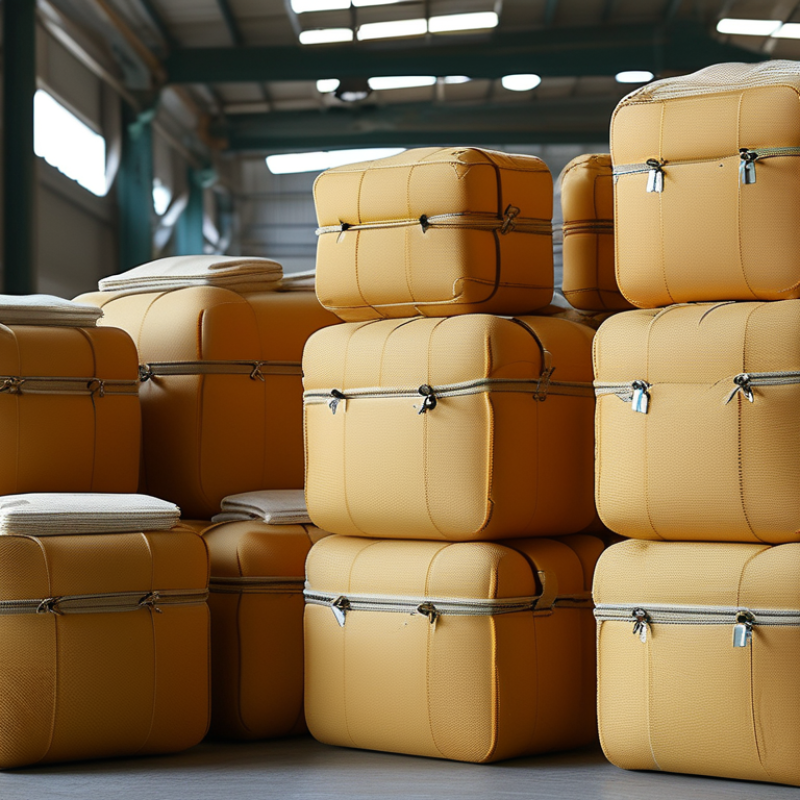
Square FIBC bags are large woven polypropylene containers designed for storing and transporting dry bulk materials. Their four-sided shape uses warehouse space efficiently and keeps pallets stable during handling. A typical bag may carry 500 to 2,000 kilograms, depending on its fabric, lifting loops, liner, and safety factor.
They are used for powders, granules, minerals, agricultural products, construction materials, and selected food ingredients. Common sites include factories, farms, ports, and distribution warehouses. The Global Flexible Intermediate Bulk Container Market was valued at about USD 5.1 billion in 2023, according to Grand View Research’s 2024 market report. The report also projects continued growth through 2030, supported by bulk logistics and packaging demand. Practical details matter. A liner can reduce moisture exposure, but it cannot correct poor sealing or rough handling. Bags intended for food contact should follow applicable hygiene requirements and verified material controls. Industrial users should also check ISO 21898 guidance, safe working load, discharge design, and lifting-loop condition.
The square form is useful, not magical. Overfilling can distort the walls and reduce stacking stability. Humidity may weaken stored products, even when the container looks intact. Some purchasing teams focus only on price, which is a costly assumption. Specification sheets, load testing, traceability, and supplier experience deserve equal attention. Where hazards exist, professional risk assessments and certified handling procedures remain essential.
Top Square FIBC Bags Manufacturers for Global Buyers
Reliable square FIBC bags begin with controlled construction, not attractive product images. Buyers should inspect woven polypropylene fabric, lifting loops, seams, and bottom discharge design. Each part must match the intended load, filling method, and storage period.
A dependable bag should state its safe working load and safety factor clearly. Testing should cover seam strength, drop resistance, fabric performance, and dimensional stability. Square construction helps pallets stay aligned and reduces unused warehouse space. However, poor filling can distort the shape and weaken corner seams. This detail is easy to overlook.
Moisture-sensitive materials need suitable liners or coated fabric. Outdoor storage also requires protection from ultraviolet exposure. Check whether the liner fits tightly without blocking discharge flow. Reliable manufacturers maintain batch records, inspection reports, and consistent measurements. These records help buyers investigate defects instead of guessing.
Practical experience matters. Ask for samples filled under realistic conditions, not empty photographs. Measure the bag after filling. Watch for leaning corners, uneven loops, or difficult discharge. No bag is perfect. A strong specification can still miss handling problems at the warehouse. Clear communication about loading equipment, transport vibration, and stacking height prevents costly assumptions. Small details often decide whether a square FIBC performs safely in daily operations.
| Evaluation Dimension | Reliable Square FIBC Specification or Benchmark | Why It Matters to Global Buyers | Recommended Verification Method |
|---|---|---|---|
| Bag Shape | Square or rectangular construction with stabilized panels and controlled dimensions | Improves pallet utilization, warehouse stacking, container loading, and storage efficiency | Review dimensional drawings and inspect filled-bag shape under the intended load |
| Typical Capacity | Common volume range: approximately 0.5–2.0 m³; payload is selected according to product density and bag design | Helps match the bag to filling equipment, product bulk density, and transport requirements | Confirm safe working load, volume, product density, and actual filled dimensions before ordering |
| Safe Working Load | Frequently specified from 500 kg to 2,000 kg, depending on fabric, seams, lifting loops, and intended use | Prevents overloading and supports safe handling during lifting, storage, and transportation | Request a documented SWL and safety factor; verify that test conditions match the intended application |
| Safety Factor | A 5:1 safety factor is widely used for many single-trip FIBC applications; reusable designs may require higher or separately specified factors | Indicates the relationship between minimum breaking load and declared safe working load | Check the test report, design type, reuse requirements, and applicable market regulations |
| Fabric Material | Woven polypropylene fabric, with coated or uncoated construction selected according to moisture and leakage requirements | Provides high strength-to-weight performance and supports economical bulk packaging | Review fabric construction, coating type, grammage, tensile results, and production samples |
| UV Protection | UV-stabilized polypropylene may be specified when bags are exposed to sunlight during storage or transport | Reduces strength degradation caused by prolonged ultraviolet exposure | Ask for the UV-stabilizer specification and relevant accelerated-weathering test information |
| Lifting Configuration | Four corner loops are common; cross-corner, sleeve, or specialty loop designs may be selected for handling equipment | Ensures compatibility with forklifts, cranes, hooks, and warehouse handling systems | Confirm loop spacing, loop length, stitching method, and lifting-test results |
| Top Construction | Open top, duffle top, filling spout, or fully closed top according to filling and containment needs | Affects filling speed, dust control, product protection, and line compatibility | Match inlet diameter, closure method, and discharge equipment with the filling process |
| Bottom Construction | Flat bottom, discharge spout, or safety-bottom outlet with tie closure, depending on controlled discharge requirements | Supports clean, controlled emptying and minimizes product loss during discharge | Test outlet dimensions, closure security, discharge rate, and residual product after emptying |
| Liner Requirement | Optional polyethylene or polypropylene liner for fine powders, moisture-sensitive goods, or higher containment needs | Improves product protection and reduces leakage through the woven fabric | Verify liner material, thickness, fit, sealing method, and compatibility with the product |
| Seam Quality | Consistent stitching, reinforced stress points, and suitable thread tension without skipped or loose stitches | Seams and attachment points are critical to load retention and handling safety | Perform visual inspection, seam-strength testing, and filled-bag handling trials |
| Antistatic Performance | Type B, C, or D FIBC designs may be selected according to dust hazard, grounding controls, and operating environment | Important when handling combustible powders or operating where electrostatic discharge presents a risk | Conduct a documented hazard assessment and verify compliance with applicable electrostatic-control standards |
| Food-Contact Suitability | Food-grade materials and controlled manufacturing may be required for direct contact with food ingredients | Supports hygiene, traceability, and regulatory compliance for food and pharmaceutical supply chains | Request material declarations, migration documentation, hygiene procedures, and batch traceability records |
| Cleanliness Control | Production environment, packaging, and inspection level should correspond to the cargo sensitivity | Reduces contamination risk for powders, chemicals, minerals, agricultural products, and food ingredients | Specify cleanliness class, inspection criteria, inner packaging, and shipment protection in the purchase order |
| UN Certification | Required for applicable dangerous goods; the certification must match the material, packing group, and FIBC design | Supports legal transport of regulated hazardous materials across international supply chains | Check the UN mark, certificate scope, test records, and destination-country transport requirements |
| Quality Documentation | Technical drawings, inspection records, material specifications, test reports, and batch traceability | Makes quality consistent across repeat orders and simplifies supplier qualification | Use a pre-shipment inspection checklist and retain lot-specific documentation |
Top Square FIBC Bags Manufacturers for Global Buyers
How to Evaluate Square FIBC Bag Manufacturers
A reliable manufacturer should provide clear specifications before discussing price. Check fabric weight, filling capacity, safety factor, lifting-loop design, and discharge options. Ask how the square shape remains stable during filling, stacking, and transport. Request recent test reports for seam strength, top-lift performance, fabric tensile strength, and ultraviolet resistance. Generic certificates are not enough. The documents should match the actual production site and bag design.
Factory experience matters in practical ways. Review production records, quality-control procedures, and traceability from woven fabric to final inspection. A capable supplier can explain how workers detect loose stitching, uneven dimensions, contamination, and weak corners. Request production samples with the same fabric grade and construction as your planned order. Measure them after filling, not only when empty. Small size changes can affect pallet stability.
Communication is another useful test. Can the manufacturer answer technical questions without avoiding details? Ask about sampling time, inspection points, packaging, lead times, and corrective actions. Independent pre-shipment inspection may add cost, but it can reveal problems before loading. No supplier is perfect. My own evaluation would still leave room for doubt, especially when samples look excellent but batch consistency remains unproven. Start with a controlled order, record performance, and compare results against the agreed specifications. Pricing matters, but predictable quality usually protects the total purchase better.
Common commercial safe working load options for square FIBC bags range from 500 kg to 2,000 kg. When evaluating manufacturers, buyers should confirm that the stated capacity is supported by design specifications, load-testing records, stitching quality, lifting-loop construction, and applicable packaging or UN certification requirements.
Global FIBC production is concentrated in Asia, where polypropylene resin, weaving equipment, and export infrastructure are widely available. China remains a major sourcing base, supported by large-scale extrusion lines and dense container-port networks. India has expanded quickly, especially in agriculture, chemicals, minerals, and food-grade packaging. Turkey and Southeast Asia also serve buyers seeking shorter routes into Europe and regional markets.
Published estimates differ because reports define the FIBC market differently. Future Market Insights valued the global market at about USD 4.3 billion in 2024 and forecasts continued growth through 2034. Grand View Research also identifies industrial bulk handling and construction as important demand sectors. These figures support a practical point: supplier capacity should be checked, not assumed. Some factories operate modern circular looms, automated cutting, and controlled stitching rooms. Others still depend heavily on manual inspection.
Supplier profiles should include measurable evidence. Buyers can request monthly output, fabric denier ranges, load-test records, batch traceability, and recent third-party audit results. ISO 21898 alignment is useful for general FIBC performance evaluation. Food-contact projects require separate documentation and controlled handling. Clean production matters. A dusty warehouse can undermine an otherwise impressive sample. Production location also affects lead times, port congestion, and communication quality. Regional expertise helps, but it does not replace factory verification. A careful sourcing process should compare technical records, not only attractive prices. Mistakes still happen, especially when buyers approve samples without reviewing repeat-production controls.
Choosing a square FIBC bag manufacturer requires more than comparing catalog prices. Buyers should review fabric weight, stitching quality, safe working load, and bag dimensions. A 90 x 90 x 120 cm bag may look standard, yet small size differences can affect pallet stability and filling efficiency. Ask for production samples before placing a large order. The seams should appear even, firm, and free from loose threads. Practical testing still matters.
Compliance documents should match the destination market and the intended application. Request material specifications, test reports, inspection records, and traceable batch information. Export reliability also depends on packaging, container loading, labeling, and agreed Incoterms. A low quote can look attractive, but weak documentation may create delays at customs. Pricing deserves careful review. Compare fabric grade, coating, lifting loops, printing, tooling, and freight separately. Some offers exclude important details. That is easy to miss.
Confirm the bag’s safety factor and working load in writing. Check whether UV treatment is included. Request photos of finished seams and packed pallets. Use an independent pre-shipment inspection when order value is significant. Keep a written approval sample. It can prevent disputes later.
Manufacturers with strong technical records usually explain limitations clearly. That honesty matters. No supplier is perfect, and buyers should question vague claims, rushed certificates, or unusually cheap pricing. A reliable partnership grows through measurable specifications, repeat inspections, and realistic delivery commitments.
: Reliable bags use suitable woven polypropylene fabric, strong seams, stable lifting loops, and a suitable discharge design. The safe working load and safety factor should be clearly stated. Looks can mislead.
Square construction can improve pallet alignment and reduce unused warehouse space. It also supports more orderly stacking. Poor filling may distort corners and stress seams.
Request reports covering seam strength, drop resistance, fabric tensile strength, top-lift performance, and dimensional stability. Ultraviolet testing may matter for outdoor storage. Generic certificates are insufficient.
Yes. Request samples made with the planned fabric grade and construction. Fill them under realistic conditions, then measure their dimensions. Check leaning corners, uneven loops, and difficult discharge.
Review batch records, inspection procedures, and traceability from woven fabric to final inspection. Ask how workers identify loose stitching, contamination, weak corners, and uneven dimensions. One excellent sample proves little.
They may need a suitable liner or coated fabric. The liner should fit securely without blocking material flow during discharge. Outdoor use may require ultraviolet protection.
Compare fabric grade, coating, lifting loops, printing, tooling, packaging, and freight separately. A low quote may exclude important specifications. Cheap can become expensive.
Confirm packaging, container loading, labeling, delivery terms, lead times, and destination-market documents. Written specifications can reduce customs delays and later disputes. Assumptions remain risky.
It can reveal defects before shipment, especially for large orders. Keep an approved sample and compare finished goods against it. Inspection adds cost. Sometimes it saves much more.
Square FIBC Bags are flexible intermediate bulk containers designed for the efficient storage, handling, and transport of powders, granules, and other dry bulk materials. Their square construction can improve warehouse organization, stacking efficiency, and container utilization, making them suitable for industries such as agriculture, food processing, chemicals, construction materials, and manufacturing. Reliable bags are defined by strong woven fabric, secure stitching, appropriate lifting loops, dust-resistant seams, and discharge options matched to the user’s filling and unloading systems.
When evaluating Square FIBC Bags manufacturers, global buyers should consider production capacity, material consistency, quality-control procedures, customization capabilities, and experience with international shipments. Important purchasing factors include product specifications, load performance, safety and compliance documentation, testing standards, lead times, packaging, pricing transparency, and export support. Comparing suppliers from established production regions can help buyers balance cost, quality, communication, and delivery reliability. A dependable manufacturer should provide clear technical information and consistent performance while adapting bag design to the application, destination requirements, and practical logistics needs.

Zhensheng