Top 10 Open Top FIBC Bags for Global Buyers?

Time:2026-11-14 Author:Oliver
0%

Choosing the right Open Top Fibc Bags starts with the material being packed, not just the quoted price. Granules, powders, and bulky products can behave differently during filling and transport. A bag that works well for dry pellets may need a liner or a different fabric specification for finer material. Small details matter.

This guide compares ten options for global buyers, including common designs, practical uses, and points to confirm with suppliers. We look at capacity, fabric weight, safe working load, lifting loops, base construction, and available documentation. Buyers should also check dimensions against filling equipment, pallets, and warehouse space. A few centimetres can affect handling.

Specifications deserve careful review. Ask for clear product drawings and test records where relevant, and confirm whether quoted ratings match the intended use. Requirements can vary by product, route, and destination, so one standard bag is not right for every shipment. That can be inconvenient.

The examples ahead are a starting point, not a substitute for sample evaluation. Inspect stitching, seams, and loop placement on a physical sample when possible. Compare supplier answers, too. Vague details are worth following up. With a little patience, buyers can narrow the shortlist and avoid choosing a bag based on appearance alone.
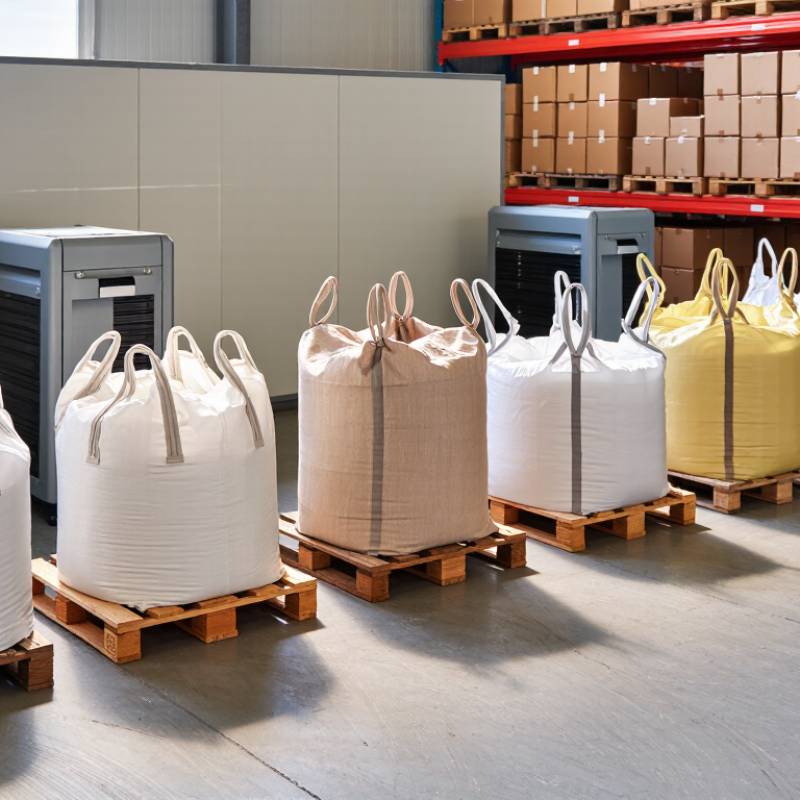
Top 10 Open Top FIBC Bags for Global Buyers?

What Open-Top FIBC Bags Are and How They Work

An open-top FIBC bag is a large flexible container made from woven fabric, commonly polypropylene. Its wide, uncovered mouth allows bulk materials to be loaded from above. Lifting loops sewn into the body let compatible equipment raise and move the filled bag. Some designs include a bottom discharge spout; others need to be emptied by tipping or cutting, so the construction should match the handling process.

During filling, material falls through the open top while the bag is supported on a pallet, frame, or filling station. Operators distribute the load evenly and avoid overfilling. A top cover or liner can help limit exposure to rain, dust, or contamination, but it does not make every bag weatherproof. Simple, but not foolproof. In practice, checking the bag’s safe working load and inspecting its seams and loops can be rushed. That deserves attention.

For buyers comparing open-top FIBCs, consider the product’s weight, particle size, flow behavior, and storage conditions. Fine powders may require a liner or a different closure arrangement to reduce leakage. Coarse materials may need a robust fabric specification and stable filling setup. Confirm that the bag is designed for the intended lifting method, and follow its handling instructions. A bag that looks suitable can still be awkward to fill or discharge in a real warehouse.

Key Features Used to Compare Open-Top FIBC Bags

When comparing open-top FIBC bags, start with the load, dimensions, and filling method. A wide opening suits fast loading, but it needs a closure that keeps dust and material contained. Check the safe working load against the actual product weight, not just the bag’s advertised capacity. Small details matter. Loop height and spacing affect how steadily a filled bag hangs during lifting.

Fabric weight and coating should match the material and storage conditions. A liner can help protect moisture-sensitive contents, though it may slow filling or discharge. Ask for test documentation, including the safe working load and the design safety factor. ISO 21898:2004 specifies FIBC design-type testing and safety factors of 5:1 for single-trip and 6:1 for multi-trip bags. These figures are not substitutes for checking the bag’s intended use and test records.

Transport conditions matter too. UNCTAD’s Review of Maritime Transport 2024 reports that more than 80% of world trade by volume moves by sea. For bags making long journeys, buyers should check fabric protection, closure security, and storage guidance. One easy-to-miss point is discharge compatibility: a bag may fill neatly but empty poorly into a narrow hopper. Compare samples under real operating conditions where possible. Specs alone can miss awkward handling.

Top 10 Open-Top FIBC Bag Types for Global Buyers

Top 10 Open-Top FIBC Bag Types for Global Buyers

Open-top FIBCs suit goods loaded from above, but their top construction and fabric vary. Common choices include plain open-top, duffle-top, coated, uncoated, sift-proof, baffle, ventilated, liner-fitted, Type C conductive, and Type D static-dissipative bags. These features can overlap; a baffle bag, for example, may also have a liner. UNCTAD’s Review of Maritime Transport 2023 reports that seaborne trade reached about 12.3 billion tonnes in 2022. For export shipments, stable stacking and protection from moisture or fine-particle leakage can matter as much as fast filling.

Tips: Match the bag to the product, filling equipment, and route. Check the safe working load and safety factor printed on the specification, and confirm relevant requirements under ISO 21898. Type C bags need proper grounding during filling and discharge; Type D bags are designed to dissipate static without grounding. Ask for test records, not just a product description.

A practical detail: powder can escape through seams even when fabric looks robust. Specify sift-proof seams for fine materials, and trial-fill one bag before ordering a full shipment. The “best” type is not universal; humidity, handling, and discharge setup can change the choice.

Top 10 Open Top FIBC Bags for Global Buyers? - Top 10 Open-Top FIBC Bag Types for Global Buyers

Open-top FIBCs are filled through an open mouth; they can be specified with different body constructions, fabrics, liners, and safety features. The options below are configurations rather than mutually exclusive categories, so several may be combined in one bag.

No. Bag Type Typical Construction Common Applications Key Checks for Buyers
1 Standard U-Panel Open-Top FIBC Body fabric is formed from a U-shaped panel and two side panels, with lifting loops sewn into the construction. General handling of dry bulk materials such as minerals, granules, and agricultural products. Confirm safe working load, dimensions, loop arrangement, fabric specification, and whether the top and bottom match the filling and discharge equipment.
2 Circular or Tubular FIBC Made from tubular woven fabric, typically reducing vertical side seams; the base and lifting-loop design depend on the specification. Dry, free-flowing bulk products where a circular body is suitable for the filling and storage setup. Check filled shape, fabric permeability, dimensions, loop configuration, and compatibility with the storage and transport system.
3 Four-Panel FIBC Constructed from four main body panels, which help the bag retain a more square shape when filled. Palletized storage and transport where a more regular footprint can help with stacking and space planning. Verify filled dimensions, pallet fit, stacking requirements, stitching, and the rated load for the intended use.
4 Baffled FIBC Internal corner baffles help limit bulging and maintain a squarer shape when the bag is filled. Space-conscious warehousing and transport of compatible dry bulk goods. Ask for filled-bag dimensions and usable capacity; confirm that baffles do not obstruct filling or discharge of the product.
5 Coated or Laminated FIBC Woven polypropylene fabric has a coating or laminate to reduce air and moisture passage through the fabric. Dry products needing an added barrier against dust or ambient moisture during handling. A coating is not automatically a fully moisture-proof system. Check seams, closures, storage conditions, and whether a liner is also required.
6 FIBC with Inner Liner A separate polyethylene or other specified liner is fitted inside the outer woven bag; liner material and fit vary by application. Products needing additional containment, reduced contamination risk, or a moisture barrier. Specify liner material, thickness, fit, filling and discharge openings, and compatibility with the product and handling process.
7 Sift-Proof FIBC Uses seam and construction details intended to reduce fine-powder leakage; a liner or coated fabric may also be specified. Fine powders and granular products where leakage through seams is a concern. Discuss particle size, flow characteristics, and acceptable leakage limits. Request a sample or trial when product containment is critical.
8 Ventilated FIBC Includes mesh or ventilated fabric sections that allow increased airflow compared with standard woven fabric. Products such as certain fresh agricultural goods that benefit from ventilation during handling or storage. Confirm that ventilation suits the product, climate, and storage period; this design does not provide the same barrier as coated fabric or a liner.
9 Type C Conductive FIBC Made with conductive threads or elements designed to dissipate static electricity when the bag is properly grounded. Specified industrial environments where combustible dusts or flammable atmospheres require static-control measures. Grounding is essential during use. Confirm the bag’s suitability for the hazard assessment and follow the supplier’s handling instructions and applicable standards.
10 Food-Contact FIBC Uses materials and manufacturing controls selected for the intended food-contact application; it may also use a liner. Handling food ingredients and other products requiring defined cleanliness or food-contact documentation. Request documentation for the destination market and intended use. Confirm hygiene controls, traceability, storage, and whether a liner or sealed inner packaging is needed.

Specifications vary by supplier, product, and destination market. Before ordering, confirm the safe working load, safety factor, dimensions, top and bottom configuration, lifting method, product compatibility, and any required testing or regulatory documentation. Static-control bags require a site-specific risk assessment; Type C bags must be grounded as instructed.

How to Match Bag Design to Cargo and Handling Needs

Open top FIBC bags suit many dry bulk materials, but the right design depends on the cargo and handling route. Granular products may load quickly through a wide opening. Fine powders can create dust, so consider a closing flap, suitable liner, or filling spout instead. Moisture-sensitive cargo may need a coated fabric or liner, though these features do not replace proper storage. Small details matter.

Match bag dimensions and safe working load to the available filling equipment, pallet size, and transport space. Check that forklift tines or lifting hooks align with the loops, and confirm the intended lifting method with the supplier. If bags will be stacked, verify that the design and filled-bag stability suit the planned stack height. A bag that fits the product may still be awkward in a narrow warehouse aisle.

Tips: Ask for a sample or technical drawing before ordering. Confirm cargo density, filling temperature, and whether the material abrades the fabric. For dusty loads, inspect seams and closure options; for outdoor staging, plan extra weather protection. These checks can feel tedious. They can also reveal a mismatch before a full shipment arrives. Don’t assume every “standard” bag behaves the same under your site’s equipment and conditions.

Global Sourcing, Safety, and Compliance Considerations

Global buyers should assess open top FIBC bags against the product, filling method, and transport route. Powder may need a liner and tighter fabric, while coarse granules may need simpler construction. Confirm safe working load, safety factor, lifting-loop design, and discharge needs with the supplier. Ask for current test records and clear specifications, not verbal assurances alone. Small details matter.

Before placing a large order, request a production sample and inspect stitching, fabric weight, dimensions, and labels. Check that documents match the exact bag model and intended use. Destination requirements can differ, especially for food-contact or export packaging, so verify them with qualified local compliance staff. Keep batch records and agree on inspection criteria in writing. A rushed choice can become expensive.

Tips: Share photos of your filling line and pallet setup with the supplier. Test bags under realistic loading and handling conditions. Review certificates independently when possible, and clarify who pays for retesting. One limitation: a sample may not represent every production batch, so plan incoming inspections too.

Top 10 Open Top FIBC Bags for Global Buyers: Sourcing, Safety & Compliance

A practical 10-point buyer checklist, grouped by sourcing consideration.

The bars count checklist items in each category; they are not market rankings or survey results. Confirm safe working load and safety factor, bag dimensions, lifting and filling arrangements, and electrostatic suitability with the supplier. ISO 21898 concerns FIBCs for non-dangerous goods; dangerous-goods shipments may require applicable UN packaging certification. Requirements depend on the cargo and destination.

FAQS

What is an open-top FIBC bag?

It is a large woven container filled from above. Lifting loops help compatible equipment move it.

How should material be loaded into the bag?

Support it on a pallet, frame, or filling station. Spread the material evenly and avoid overfilling. Not foolproof.

Does an open top protect contents from rain and dust?

A cover or liner can reduce exposure, but it does not make every bag weatherproof. Storage conditions still matter.

Which bag features suit fine powders?

A liner or sift-resistant seams can help limit leakage. Test one filled bag first; powder can escape through small gaps.

How do coarse materials affect bag choice?

Consider robust fabric and a stable filling setup. Particle size and weight both matter.

What should buyers check before lifting a filled bag?

Confirm its safe working load, safety factor, and lifting-loop design. Inspect the seams, too. These checks can be rushed.

How can buyers compare different top and fabric designs?

Options include plain open tops, duffle tops, coated or uncoated fabric, and ventilated designs. Features can overlap.

What should buyers do before placing a large order?

Request a sample and check its stitching, dimensions, fabric, and labels. Not every batch. Plan incoming inspections, too.

Conclusion

This guide explains what Open Top Fibc Bags are, how their open-mouth design supports filling and handling, and which features matter when comparing options. It reviews ten common bag types, from standard open-top designs to variations suited to different filling, discharge, and lifting requirements. Buyers can compare factors such as capacity, fabric strength, construction, lifting loops, liners, and closure options to understand how each design may perform in practical applications.

Choosing the right bag means matching its structure and specifications to the cargo’s weight, flow, storage conditions, and handling equipment. The guide also highlights global sourcing considerations, including clear supplier communication, consistent quality checks, safe handling practices, and relevant compliance requirements. By assessing these points together, buyers can make informed choices that support efficient transport and storage while reducing the risk of selecting a bag that does not suit their operational needs.

Oliver

Oliver

Oliver is a seasoned marketing professional with a wealth of expertise in driving brand awareness and engagement. With a deep understanding of our company's product offerings, he consistently delivers high-quality content that enriches our professional blog. His insights not only shed light on......