How to Choose Tubular FIBC Bags for Bulk Handling?

Time:2026-10-19 Author:Sienna
0%

Choosing Tubular Fibc Bags for bulk handling is not a simple catalogue decision. The correct bag must match the product, filling method, discharge system, storage conditions, and transport route. A fine powder behaves differently from granulated resin. Moisture-sensitive goods also require stronger protection than dry, stable materials.

Packaging engineer Dr. Elena Marquez explains, “The right FIBC begins with the material, not the catalogue photograph.” This practical view keeps selection focused on real operating conditions. Buyers should examine safe working load, safety factor, fabric construction, liner compatibility, lifting loops, and discharge design. A bag placed beneath a dusty filling line needs suitable filtration and secure closure. A bag stored outdoors may require UV protection. Small details matter.

Product flow matters too. Some materials bridge inside the container. Others compact near the outlet. Tubular Fibc Bags can support controlled filling and discharge, but their design must suit the equipment. Test samples before ordering large quantities. That step feels slower, yet it can reveal weak seams, poor flow, or an awkward outlet position.

There is no universal bag.

A reliable choice also depends on supplier documentation, inspection records, traceability, and handling instructions. Specifications should be reviewed with qualified packaging and safety personnel. Even experienced teams can overlook humidity, pallet movement, or repeated lifting. This guide explores those practical decisions, while recognizing one uncomfortable truth: the cheapest bag is rarely the lowest-cost option when damaged products, delays, or manual rework appear.
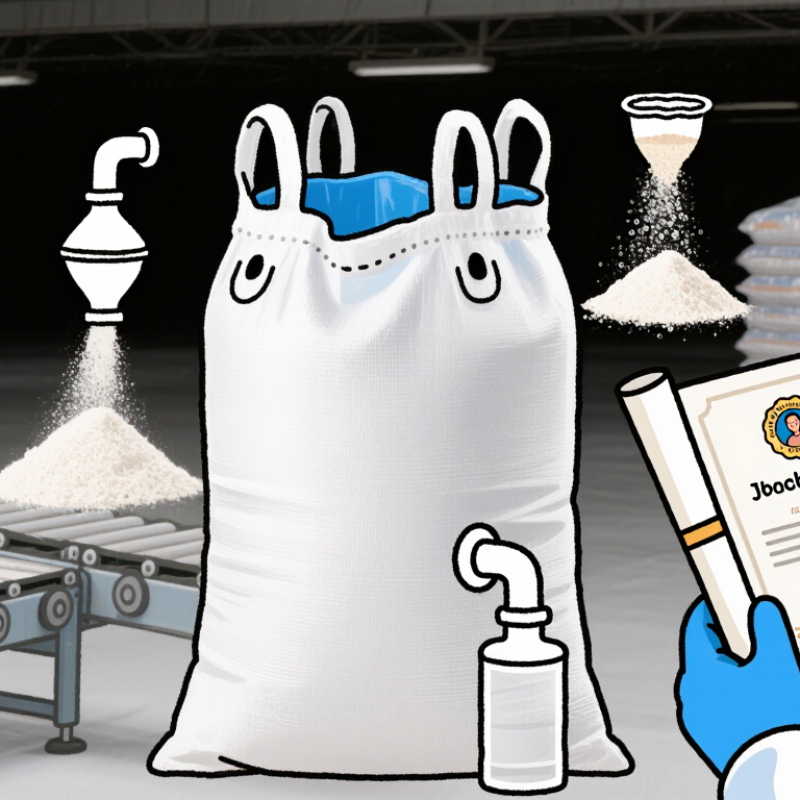
How to Choose Tubular FIBC Bags for Bulk Handling?

Define the Load, Material, and Handling Requirements

How to Choose Tubular FIBC Bags for Bulk Handling?

Start by defining the load before comparing bag specifications. Record the product’s weight, bulk density, particle size, moisture level, and discharge behavior. Fine powders may require tighter fabric and a suitable liner. Sharp granules can stress seams during filling and transport. A 1,000-kilogram load creates very different demands from a light agricultural product. The working load limit must include realistic handling conditions, not only the product weight.

Material compatibility matters just as much. Polypropylene fabric suits many dry bulk goods, but it is not automatically right for every application. Check exposure to heat, ultraviolet light, humidity, and chemical contact. Tubular construction can reduce seams and support smoother filling. However, fewer seams do not remove the need for proper fabric strength and inspection. A small amount of product dust around the liner may reveal a poor fit.

Handling requirements often decide the practical design. Specify forklift loops, lifting points, filling openings, discharge spouts, and stacking height. Measure the available pallet and warehouse space. During site assessments, I have seen bags selected correctly on paper but used with unsuitable lifting equipment. That mistake can damage the bag and interrupt production. Ask how often each bag will be moved, whether it will be stored outdoors, and how operators will inspect it. I would also test a sample under actual conditions. Laboratory data helps, but real handling can expose overlooked problems.

Compare Tubular FIBC Designs and Construction Features

How to Choose Tubular FIBC Bags for Bulk Handling?

Tubular FIBC bags use circular woven fabric for a smoother, cleaner body. Their rounded construction reduces exposed seams and supports consistent filling. This design suits fine powders, granules, and products needing controlled discharge. However, a tubular body is not automatically stronger. Fabric weight, weave density, and tested safe working load matter more than appearance.

Compare the filling and discharge features carefully. A top spout can reduce dust during filling, while a bottom spout supports measured unloading. A full-open bottom is faster, but it may offer less control. Drawstring closures are simple and practical. Tie closures need careful handling. Small details matter. Check whether the spouts match your filling equipment and pallet height.

Loop construction also affects daily safety and efficiency. Corner loops support common forklift lifting, while cross-corner loops can suit specific lifting frames. Reinforced loop stitching should distribute weight without pulling the body fabric upward. Internal liners may protect moisture-sensitive materials, but poorly fitted liners can fold into the outlet. That problem is easy to miss. Inspect seams, stitching, and lifting points before regular use. A bag that looks neat may still perform poorly if its load tests or construction records are unclear. Trial filling with the real material is often more useful than choosing from photographs alone.

Evaluate Safety Factors, Liners, and Discharge Options

How to Choose Tubular FIBC Bags for Bulk Handling?

Choosing a tubular FIBC bag starts with the load, not the catalog photograph. Record product density, moisture sensitivity, flow behavior, and filling temperature. A trained packaging engineer should match the bag’s safe working load to the actual handling cycle. Safety factors are not decoration. They protect against lifting shocks, uneven loading, and repeated warehouse movement. Ask for test evidence, including top-lift tests, seam inspection, and a documented safety factor. A bag that survives one lift may still fail after vibration or storage.

Liners matter when powder can leak, absorb humidity, or cling to woven fabric. Select a liner material compatible with the product and filling temperature. Check whether it is loose, form-fitted, or attached at the inlet and outlet. A loose liner may wrinkle near the discharge spout. That can slow flow and leave residue. For fine powders, inspect seals around the spout and liner neck. Small gaps become expensive problems. I have seen teams choose a moisture barrier, then discover condensation trapped inside. The specification was correct, but the storage environment was not.

Discharge design should reflect the equipment below the bag. A full-bottom outlet supports controlled emptying, while a conical or iris-style closure may suit metered flow. Confirm outlet diameter, tie length, access height, and grounding needs before ordering. Trial the bag with the real material. Flow can change dramatically with humidity and compaction. Do not rely only on a supplier’s flow estimate. Record discharge time, residual powder, and operator handling effort. One practical detail is often missed: the outlet must remain reachable after the bag settles.

How to Choose Tubular FIBC Bags for Bulk Handling? - Evaluate Safety Factors, Liners, and Discharge Options

Selection Dimension Common Options Technical Characteristics Recommended Use Important Verification Points
Safety Factor 5:1 or 6:1 The safety factor compares the bag's rated safe working load with the load used during testing. A 5:1 or 6:1 rating is commonly specified for single-trip FIBCs. Use the factor required by the handling procedure, destination regulations, and risk assessment. Confirm the rated safe working load, test method, lifting configuration, number of intended trips, and whether the bag is approved for reuse. Do not select a bag by safety factor alone.
Bag Body Fabric Coated or uncoated woven polypropylene Uncoated fabric allows limited air exchange, while coated fabric improves resistance to moisture and fine-powder leakage. Choose uncoated fabric for many dry, non-hygroscopic materials and coated fabric when moisture protection or better containment is needed. Check fabric weight, seam construction, UV exposure, abrasion conditions, and compatibility with the product's temperature and chemical properties.
Liner Material LDPE, HDPE, aluminum-laminated, or form-fit liner Polyethylene liners improve product containment and can provide a cleaner internal surface. Form-fit liners generally reduce folding and dead space inside the bag. Use a liner for fine powders, hygroscopic products, contamination-sensitive materials, or products requiring improved moisture protection. Verify liner thickness, food-contact or regulatory status where applicable, heat resistance, chemical compatibility, static-control requirements, and liner attachment method.
Static-Control Type Type A, B, C, or D Type A is for nonflammable products in nonhazardous environments. Type B limits brush-discharge energy. Type C uses conductive elements that must be grounded. Type D is designed to dissipate charge without a grounding connection when properly specified. Select according to product combustibility, dust-cloud hazards, solvent vapors, and the classification of the filling and discharge area. In hazardous environments, obtain a documented electrostatic risk assessment. Type C bags must be grounded before filling, handling, and discharge; static-control selection should not be based only on product name.
Top Filling Design Open top, duffle top, spout top, or conical top Top designs control filling speed, dust release, and access to the product. Spout and conical designs provide more controlled connections than an open top. Use an open or duffle top for simple gravity filling and a spout or conical top for enclosed filling systems or dust-sensitive operations. Match the inlet diameter, length, closure method, dust-collection connection, and filling rate to the equipment interface.
Discharge Option Flat bottom, discharge spout, iris closure, or full-bottom discharge A discharge spout provides controlled emptying. An iris closure allows flow adjustment and resealing. Full-bottom discharge supports rapid emptying but may require stronger control measures. Choose a discharge spout for general-purpose controlled unloading, an iris closure for metered flow, and a full-bottom outlet for high-throughput systems designed for that configuration. Confirm outlet diameter, spout length, closure type, connection to the receiving equipment, residual product requirements, and operator access during discharge.
Product Flowability Free-flowing, cohesive, dusty, or bridging material Material flow depends on particle size, moisture, bulk density, shape, cohesiveness, and compaction during storage or transport. Free-flowing products may use standard outlets. Cohesive or bridging products may require a larger outlet, conical bottom, liner design, vibration, or a controlled discharge system. Test the actual material where possible. Do not assume that two products with similar bulk density will discharge in the same way.
Working Load Specified safe working load based on the filled product The safe working load must account for the product mass, bulk density, filling level, lifting method, and dynamic handling conditions. Select a capacity that keeps the filled bag within its rated load and dimensions while allowing safe lifting and stable stacking. Consider product density variation, moisture uptake, shock loading, forklift or hoist handling, and the combined load when bags are stacked.
Lifting Configuration Four corner loops, cross-corner loops, sleeves, or lifting straps Lifting elements are designed for particular equipment and load paths. Uneven lifting can overload loops, seams, or the bag body. Use four corner loops for compatible forklift or hoist handling and sleeves when the handling system is specifically designed for sleeve lifting. Use all required lifting points simultaneously, keep lifting equipment centered, and never lift from an outlet spout or liner.
Moisture Protection Uncoated fabric, coated fabric, liner, or laminated liner Woven polypropylene fabric alone is not a fully moisture-tight barrier. Coatings and liners can improve resistance to external moisture and vapor transfer. Use a liner or laminated construction for hygroscopic powders and moisture-sensitive products, especially during outdoor or long-distance transport. Define whether protection is needed against rain, humidity, condensation, vapor transmission, or liquid leakage; these are different performance requirements.
Reuse and Inspection Single-trip or reusable design Reuse depends on the bag's design, certification, inspection history, cleanliness, and absence of damage or contamination. Use single-trip bags when traceability, contamination control, or regulatory requirements make reuse unsuitable. Reusable bags require a documented inspection process. Inspect loops, seams, fabric, discharge closures, liners, labels, and signs of ultraviolet or chemical damage before every reuse.
Storage and Stacking Floor storage, rack storage, or controlled stacking Filled-bag stability depends on bag shape, product behavior, stacking pattern, floor conditions, and the bag's tested stacking capability. Use stable, upright configurations with suitable pallets or handling supports where required by the operation. Follow the supplier's stacking instructions, keep bags away from sharp edges and heat sources, and avoid stacking damaged or unstable bags.
Selection note: The final tubular FIBC specification should be confirmed through a product-specific risk assessment covering the material, filling and discharge equipment, transport conditions, static hazards, regulatory requirements, and the bag's documented test data.

Check Compatibility with Filling, Transport, and Storage Systems

How to Choose Tubular FIBC Bags for Bulk Handling?

Choosing tubular FIBC bags starts with the equipment around them. The bag must fit the filling spout, discharge frame, lifting points, and weighing controls. Measure connection diameters and clearance before ordering. A narrow inlet may slow filling and trap powder. A loose outlet can cause dust, product loss, or unstable flow. During site checks, observe the actual filling cycle, not only drawings. Operators often notice awkward handling first. Their experience matters.

Transport compatibility depends on load movement. Confirm pallet dimensions, forklift access, container height, and securing methods. Filled bags should remain stable during braking and turning. Select fabric strength, lifting design, and safety factor according to product density and handling frequency. Check seams and loops after trial lifts. One test is better than assumptions. Vibration can expose weaknesses that static inspections miss. A bag specification may pass review but fail practical clearance checks. The numbers can be correct; the workflow may not be.

Storage conditions also shape bag choice. Check stack height, floor moisture, sunlight, temperature, and ventilation. Use liners or coatings only when they match the material and filling process. A bag that performs well in a dry warehouse may behave differently near humidity. Confirm discharge access after stacking, because blocked outlets cause rushed handling. Keep records for batch, load, and inspection results. No checklist is perfect. Revisit it after the first shipment.

Verify Quality Standards and Select the Right Supplier

Choosing a tubular FIBC bag begins with verifying its quality documentation. Ask for the safe working load, safety factor, fabric specification, and seam strength. ISO 21898 may provide a useful reference for FIBC performance. However, your material and handling process still determine the correct design.

Inspect samples carefully. Check the tubular body for even weaving, clean seams, and stable lifting loops. Examine the filling and discharge spouts for secure stitching and smooth operation. If the powder is sensitive, confirm liner compatibility and electrostatic control requirements. Request recent test reports, batch records, and certificates from qualified laboratories. A printed certificate alone proves very little.

Supplier selection requires more than comparing prices. Visit the production site when possible, or request clear process photographs and inspection procedures. Reliable suppliers should explain raw material control, sewing checks, load testing, and traceability. Ask how they handle nonconforming bags. Good answers are specific. A perfect checklist can still miss weak stitching hidden inside a fold. We once treated appearance as proof of strength, and that assumption was too simple. Approve a trial batch before placing a larger order. Record filling weight, stacking conditions, transport movement, and discharge performance. Then discuss any failure openly with the supplier. Pay attention to response speed, technical evidence, and willingness to correct details.

FAQS

What should I define before choosing a tubular FIBC bag?

Record load weight, bulk density, particle size, moisture, and discharge behavior. A 1,000-kilogram load needs careful handling planning. Do not rely on product weight alone.

Is tubular construction automatically stronger?

No. Circular woven fabric can reduce exposed seams and support smooth filling. Fabric weight, weave density, seam strength, and tested load limits matter more.

Which materials suit tubular FIBC bags?

Polypropylene fabric suits many dry bulk products. Check heat, ultraviolet exposure, humidity, and chemical contact first. Material compatibility cannot be guessed.

When might a liner be useful?

A liner can protect moisture-sensitive powders and fine products. Poor fitting may cause folds near the outlet. Inspect the liner during trial filling.

How should I choose filling and discharge features?

Match the top spout, bottom spout, or full-open bottom to your equipment. A top spout can limit dust. A bottom spout supports controlled unloading.

Which lifting loops are appropriate?

Corner loops suit common forklift lifting. Cross-corner loops may fit special frames. Reinforced stitching should spread weight without pulling the body fabric upward.

What quality documents should a supplier provide?

Request safe working load, safety factor, fabric details, seam strength, test reports, batch records, and laboratory certificates. A printed certificate proves very little alone.

How can I evaluate a supplier before a large order?

Inspect samples and, if possible, visit production. Review raw material control, sewing checks, load testing, and traceability. Approve a trial batch first.

Why is real-condition testing important?

Laboratory data helps, but actual handling reveals overlooked problems. Test filling, stacking, transport movement, and discharge with the real material. Paperwork can miss weak stitching.

Conclusion

Choosing the right Tubular Fibc Bags begins with a clear understanding of the product load, bulk density, flow characteristics, and handling environment. Consider how the bags will be filled, lifted, transported, stacked, and stored, as these factors determine the required capacity, fabric strength, safety factor, and construction style. Compare tubular body designs, lifting loops, seams, and top and bottom configurations to find a balance between durability, efficiency, and discharge control.

The bag should also be evaluated for liner requirements, moisture protection, static control, and compatibility with filling and emptying equipment. Confirm that its dimensions and lifting design fit existing transport and storage systems without creating instability or wasted space. Before making a purchase, verify quality inspection procedures, material traceability, performance testing, and supplier consistency. A reliable supplier should be able to provide clear specifications and help match the bag design to the application, ensuring safe, efficient, and dependable bulk handling.

Sienna

Sienna

Sienna is a skilled marketing professional with a deep expertise in our company’s core products and services. With a passion for innovation and detail, she plays a pivotal role in crafting insightful blog posts that not only highlight the unique features of our offerings but also provide valuable......