Finding dependable 4-Panel FIBC Bags suppliers in China requires more than comparing prices. The right partner should understand load safety, fabric performance, stitching accuracy, and export consistency.
David Zhang, a senior bulk packaging consultant, states, “A reliable FIBC bag begins with a verified specification, not a low quotation.” This principle is easy to overlook. It also matters most when bags carry powder, minerals, chemicals, food ingredients, or construction materials.
A serious supplier should explain its fabric weight, safe working load, safety factor, liner options, and lifting-loop design. Ask for production samples. Inspect the seams, corner construction, printing, and discharge spout. Small defects often become expensive during filling or transport.
Look for evidence of controlled manufacturing. Useful records include material inspection reports, tensile testing, factory quality procedures, and relevant certificates. A supplier should also confirm its production capacity, lead time, packaging method, and export experience. Clear answers usually indicate better process discipline.
Do not rely only on polished websites. Visit the factory when possible, or arrange an independent audit. Speak with previous buyers. Their experience may reveal delays that a brochure never mentions.
The cheapest quotation can be misleading. Yet high prices do not automatically prove quality. This is where careful comparison becomes necessary.
Our guide explains how to evaluate China-based 4-Panel FIBC Bags manufacturers, compare technical offers, verify quality claims, and reduce purchasing risks. Some recommendations may seem basic. They are still frequently missed. A practical checklist, verified samples, and honest communication can separate a dependable supplier from an attractive but unsuitable choice.
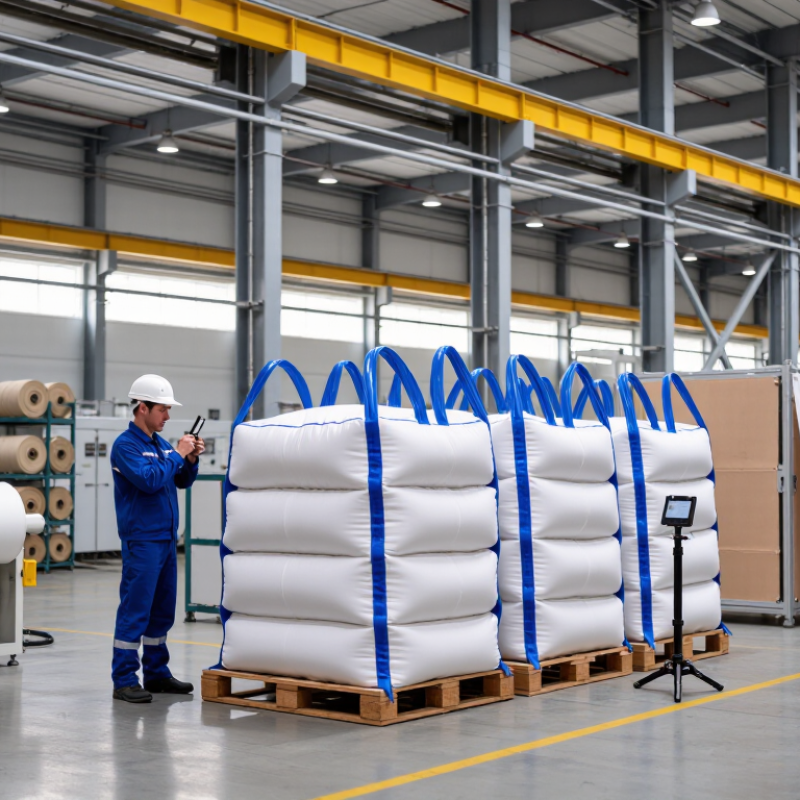
Before contacting China 4 Panel FIBC bag suppliers, define the load and handling conditions precisely. Grand View Research estimates that the global FIBC market was worth about USD 6.6 billion in 2023. This growth increases supplier choice, but it also makes specification errors easier to overlook.
Record the material density, bag capacity, filling method, discharge style, and required safe working load. A 1,000-kilogram bag may need different fabric from a 500-kilogram bag. Specify dimensions in millimetres, lifting-loop design, top construction, bottom outlet, liner type, and coating requirements. Consider moisture, dust control, storage duration, and whether bags will be stacked. ISO 21898 provides useful guidance for FIBC construction and performance testing. Ask suppliers for test reports, fabric weight, seam strength, and safety-factor documentation.
Small details matter.
Request a pre-production sample with clear acceptance criteria. Check loop alignment, stitching consistency, outlet closure, and actual bag dimensions. The Freedonia Group’s bulk packaging research identifies industrial materials and food-related applications as major demand areas, yet application conditions vary widely. Do not copy a competitor’s specification without checking your own filling equipment. That shortcut can fail. I have seen quotations compare different assumptions while appearing identical. Confirm minimum order quantity, sampling charges, lead time, inspection procedures, and replacement terms in writing. A dependable supplier should explain what the bag can handle, not merely promise a low price.
How to Find Top China 4 Panel FIBC Bags Suppliers?
Identify qualified China FIBC bag manufacturers by checking production evidence, not attractive catalog images. A serious factory should provide recent test reports, batch records, and clear material specifications. For 4 panel FIBC bags, review fabric strength, seam quality, lifting loops, discharge options, and liner fitting. Ask for a sample from normal production, not a specially prepared prototype.
Market data supports careful supplier selection. IMARC Group reported that the global FIBC market reached about USD 5.3 billion in 2023, with continued growth expected through 2032. Grand View Research also identifies rising demand from agriculture, chemicals, food processing, and construction. These figures show market opportunity, but they do not prove factory competence. Request test results aligned with ISO 21898, including safe working load, top lift strength, and stacking performance.
Audit the manufacturer’s quality system and traceability process. Confirm whether inspectors check fabric density, stitching tension, dimensions, and contamination risks before shipment. A factory should explain how it handles rejected materials and corrective actions. Ask for production capacity using actual monthly records. Be cautious with vague answers. A polished sample can still hide inconsistent bulk production. No checklist is perfect. Price, delivery speed, and quality may conflict, so record every decision and verify critical claims independently.
Identify Qualified China FIBC Bag Manufacturers with a 100-Point Supplier Qualification Model
This sourcing scorecard focuses on practical qualification factors for 4-panel FIBC bags: product compliance, load safety, quality consistency, manufacturing capability, customization, and export execution. Buyers can use the weighted criteria to compare suppliers objectively before requesting samples, factory audits, and test reports.
When searching for top China 4 Panel FIBC Bags suppliers, evaluate the product before trusting the sales presentation. A reliable supplier should provide clear specifications for working load, safety factor, dimensions, fabric weight, and seam construction. Ask for production samples, not only photographs. Check the four panels for even weaving, firm stitching, clean corners, and balanced lifting loops. Small defects can become serious during filling, storage, or transport.
Material selection affects both performance and cost. Most bags use woven polypropylene, but fabric thickness, coating, UV treatment, and liner quality can vary considerably. Request the raw material grade and test data. Inspect whether the liner fits neatly without excessive wrinkles or weak sealing points. Certifications should match the intended application and current production site. Verify certificate numbers, issuing organizations, test dates, and product scope. A glossy certificate is not enough. Some documents may cover a different model or outdated material batch.
Tips: Compare samples from at least three suppliers under the same criteria. Record fabric weight, seam strength, size tolerance, and test results in one table. Ask whether inspections are internal or performed by an independent laboratory. I have found that suppliers sometimes provide excellent samples but inconsistent bulk production. Therefore, include pre-shipment inspection and a retained sample in the purchasing agreement. Do not overlook communication quality; unclear answers about materials often signal deeper quality-control problems.
How to Find Top China 4 Panel FIBC Bags Suppliers?
Comparing supplier prices requires more than reading the unit cost. Request quotations for identical specifications, including dimensions, fabric weight, coating, safe working load, and safety factor. A supplier quoting USD 3.20 may exclude printing, palletizing, or export packaging. Price alone misleads. Ask for a complete cost sheet, estimated production time, and payment terms. Include shipping and inspection fees before making a decision.
Service quality becomes visible during sampling. Ask whether the supplier provides a pre-production sample, stitching details, test reports, and clear responses within one business day. Check how complaints are recorded and corrected. I once focused too heavily on fast replies and overlooked weak sample documentation. That was a costly lesson. Reliable suppliers should explain their quality-control stages, from woven fabric inspection to final load testing.
Production capability needs evidence. Review monthly capacity, equipment for four-panel sewing, printing limits, and experience with customized inlet and outlet designs. Request recent factory photographs, production records, and traceable batch samples. An independent inspection can verify fabric density, seam strength, dimensions, and cleanliness. Confirm whether the factory can maintain consistent output during peak periods. A small trial order may reveal more than a polished presentation. Compare defect rates, packing accuracy, lead-time performance, and after-sales support alongside the final quotation.
How to Find Top China 4 Panel FIBC Bags Suppliers?
A reliable supplier should provide a physical 4 panel FIBC bag before contract approval. Check the fabric weight, panel stitching, lifting loops, and discharge spout carefully. Measure the sample against your required dimensions. Small differences can affect filling equipment and warehouse stacking.
Ask for test records covering safe working load, safety factor, seam strength, and fabric performance. Do not rely on a neat appearance alone. A polished sample can hide inconsistent stitching inside the seams. Request samples from different production batches when possible. That extra step costs time, but it may reveal quality variation.
The contract should define every important detail, including tolerance limits, printing, packaging, inspection rights, delivery dates, and claim procedures. Confirm the agreed trade terms and export documents before placing an order. Reliable suppliers should explain container loading, moisture protection, and document preparation clearly. Request recent shipment references or anonymized export records. These details show practical experience, not just sales confidence. I once focused too heavily on a low sample price and overlooked slow document handling. That mistake delayed customs clearance. A better review checks factory capacity, backup material sources, and communication during unexpected delays. Ask difficult questions early. Vague answers deserve another sample or a smaller trial order.
Check recent test reports, batch records, material specifications, and production evidence.
Check even weaving, firm seams, clean corners, and balanced lifting loops.
Ask for the woven polypropylene grade, fabric weight, coating, and ultraviolet treatment.
Request records for safe working load, safety factor, seam strength, and stacking performance.
Request samples from different production batches when possible.
Ask how inspectors check fabric density, dimensions, seams, and contamination risks.
Define dimensions, tolerance limits, fabric weight, printing, packaging, inspection rights, and delivery dates.
Request recent shipment references or anonymized export records.
Finding reliable China 4-Panel Fibc Bags suppliers starts with clearly defining your packaging requirements, including bag dimensions, load capacity, fabric type, coating, lifting loops, discharge options, and intended application. A clear specification helps you identify manufacturers with suitable equipment, technical expertise, and experience in producing the required bag design. When reviewing potential suppliers, assess their material quality, stitching strength, production controls, and relevant certifications. It is also important to compare pricing alongside minimum order quantities, lead times, customization services, and manufacturing capacity rather than choosing solely by the lowest quotation.
Before placing an order, request samples to evaluate construction, dimensions, cleanliness, and performance. Confirm that the contract clearly states product specifications, inspection standards, payment terms, delivery schedules, and procedures for handling quality issues. You should also verify the supplier’s export experience, communication efficiency, packaging methods, and ability to provide consistent production. A careful comparison of these factors can help you select a dependable partner for high-quality 4-Panel Fibc Bags and support stable long-term cooperation.

Zhensheng