Choosing the right Fibc Manufacturer is more than comparing prices on a product sheet. Buyers need a partner that understands load behavior, filling methods, storage conditions, and delivery pressure. A reliable manufacturer should explain how fabric weight, seam construction, liner design, and lifting loops affect safety and performance. It should also provide clear specifications instead of vague promises.
Look closely at the factory’s working evidence. Ask for recent test reports, batch records, material details, and samples from normal production. Inspect the stitching, corner loops, discharge spout, and liner fit. These small details often reveal quality differences. A professional supplier should discuss applicable industry standards and provide traceable documentation for the intended application. Food, chemical, agricultural, and pharmaceutical packaging may require different controls. One design rarely suits every shipment.
Experience matters here.
Buyers should also evaluate communication, production capacity, inspection procedures, and after-sales support. A factory visit, video audit, or independent inspection can confirm whether the claimed process matches reality. Still, no checklist is perfect. A polished sample may not represent every production batch, and an attractive quotation may hide weak support. That is why practical testing, written requirements, and staged approval remain valuable. The strongest choice is not always the cheapest Fibc Manufacturer. It is the supplier that can consistently deliver suitable bulk bags, explain limitations honestly, and respond responsibly when something needs improvement.
What Is a FIBC Manufacturer?
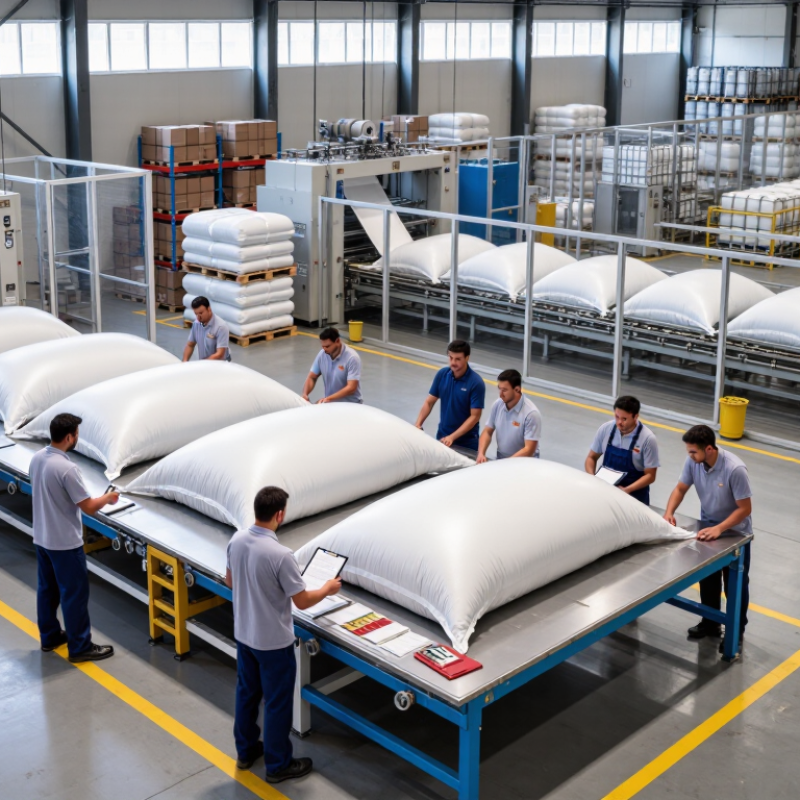
A FIBC manufacturer produces flexible intermediate bulk containers for storing and transporting dry, flowing materials. The work involves more than sewing polypropylene fabric into a large bag. A capable manufacturer develops the bag structure, selects fabric strength, and controls each production stage.
The process usually begins with woven polypropylene tapes. These tapes become fabric panels, lifting loops, liners, and discharge spouts. Workers then cut, sew, inspect, and package each container. Design details matter. A food-grade application may require a clean production area and carefully controlled materials. A construction application may need stronger fabric, reinforced seams, or a specific filling method.
Testing should be practical, not merely listed on a brochure. Manufacturers may check seam strength, fabric weight, dimensions, lifting loops, and safe working load. Drop tests can reveal weak corners. Visual inspection may catch loose threads or uneven stitching. Buyers should ask for test records, production samples, and traceable quality procedures.
A manufacturer should also understand the buyer’s handling conditions. Will the container face outdoor storage, forklift lifting, automatic filling, or repeated movement? A good technical discussion often prevents an expensive mismatch. Inexperienced suppliers may promise every specification. That deserves caution.
No factory is perfect. Even a well-controlled process can produce occasional defects. Reliable manufacturers identify those defects before shipment and explain corrective actions clearly. Buyers should remain involved, because trust should come from evidence, not confident language.
| Evaluation Dimension | Typical FIBC Specification or Requirement | What a Qualified FIBC Manufacturer Should Provide | Recommended Buyer Verification |
|---|---|---|---|
| Product Definition | Flexible Intermediate Bulk Container made primarily from woven polypropylene fabric for transporting dry bulk materials. | A clear description of the container design, intended filling method, discharge method, and cargo compatibility. | Confirm that the proposed bag design matches the material density, particle size, filling process, and unloading equipment. |
| Safe Working Load | Common commercial ratings include 500 kg, 1,000 kg, 1,250 kg, and 1,500 kg, depending on design and test results. | A stated SWL and safety factor supported by design records and test documentation. | Check the required SWL, safety factor, bag dimensions, lifting arrangement, and whether the bag is designed for single-trip or reusable service. |
| Safety Factor | A 5:1 safety factor is commonly used for many single-trip FIBCs; reusable designs may require a higher factor such as 6:1. | Test results that correspond to the exact fabric, seams, lifting loops, and finished-bag construction. | Do not rely only on a generic certificate; request test evidence for the same model and construction being purchased. |
| Fabric and Construction | Woven polypropylene fabric with coated or uncoated construction, selected according to moisture, dust, static, and load requirements. | Fabric specifications covering weight, coating, seam type, liner compatibility, and lifting-loop construction. | Review a production sample and compare fabric weight, dimensions, stitching, seams, loops, and closures with the approved specification. |
| Filling and Discharge | Typical configurations include open top, duffle top, filling spout, flat bottom, discharge spout, and conical bottom. | A technical drawing showing the top, bottom, inlet, outlet, flap, closure, and dimensions. | Match inlet and outlet dimensions to the buyer’s filling and discharge equipment to reduce handling problems and product loss. |
| Dimensions and Capacity | Many standard FIBCs use approximate capacities from 0.5 to 2.0 cubic metres, but the correct size depends on bulk density and filling height. | Finished dimensions, volume, tolerances, and a calculation based on the product’s bulk density. | Validate the filled bag dimensions against pallets, warehouse clearances, truck limits, and container loading plans. |
| Static Control | Types commonly include Type A, Type B, Type C, and Type D, selected according to the product and operating environment. | A documented static-control design and instructions for grounding, humidity, hazardous areas, and compatible equipment. | Have a qualified safety professional determine the required FIBC type; do not use Type A for applications requiring static protection. |
| Food and Pharmaceutical Use | Food-contact applications may require suitable raw materials, controlled manufacturing, cleanliness procedures, and traceability. | Relevant declarations, hygiene controls, raw-material information, inspection records, and cleaning or packaging procedures. | Confirm that the documentation applies to the exact fabric, liner, thread, printing ink, and manufacturing site used for the order. |
| Quality Inspection | Important checks include dimensions, fabric weight, seam strength, loop strength, appearance, contamination, and closure performance. | A written quality-control plan, inspection frequency, defect classification, and corrective-action process. | Agree on acceptance criteria before production and use pre-shipment inspection or independent sampling for higher-risk orders. |
| Testing and Standards | Testing may cover lifting, toppling, stacking, tear, drop, and cyclic or vibration performance according to the selected specification. | Current test reports or certificates identifying the product design, test method, date, and laboratory or responsible testing body. | Check that the test configuration, SWL, safety factor, and bag construction match the final purchase specification. |
| Traceability | A traceable order should connect the finished bags with production lots, raw materials, inspection records, and shipment documents. | Lot numbers, production dates, inspection records, retained samples, and a documented complaint-handling process. | Request a sample traceability record and confirm how nonconforming products are segregated and controlled. |
| Sampling and Approval | A pre-production sample or approved reference sample is recommended for customized FIBC designs. | A sample approval process covering dimensions, fabric, accessories, printing, seams, closures, and packaging. | Sign off the final sample before mass production and retain an approved reference for incoming inspection. |
| Production Capacity | Capacity should be evaluated by the manufacturer’s ability to produce the required design consistently, not only by stated monthly volume. | Production planning, equipment capability, subcontracting controls, workforce capacity, and contingency arrangements. | Compare required order quantity and delivery schedule with demonstrated capacity for similar bag types and specifications. |
| Lead Time | Lead time varies with customization, raw-material availability, printing, liner production, testing, and order quantity. | A written production schedule with milestones for artwork approval, sampling, production, inspection, and shipment. | Obtain a realistic schedule in writing and identify which events could cause delay or require buyer approval. |
| Packaging and Shipping | FIBCs are commonly folded, compressed or bundled, protected from moisture, and packed according to handling requirements. | Packing specifications, bundle quantities, labels, pallet details, container-loading plans, and moisture-protection measures. | Confirm the packed dimensions and gross weight to calculate storage requirements and transportation costs accurately. |
| Supplier Selection | Technical fit Quality control Traceability Communication | A complete quotation should include the technical specification, test requirements, inspection terms, delivery terms, and after-sales process. | Compare suppliers using the same specification and total cost of ownership rather than comparing unit price alone. |
An FIBC manufacturer makes flexible containers for storing and transporting dry, flowing materials. The process includes fabric weaving, cutting, sewing, inspection, and packaging. It is more than making a large bag.
Woven polypropylene tapes usually form the main fabric. These tapes can also become lifting loops, liners, and discharge spouts. Material choice should match the load and handling conditions.
Buyers should confirm dimensions, fabric strength, lifting-loop design, liner needs, and discharge options. Outdoor storage may require different protection than indoor use. Small details matter.
Ask for fabric specifications, test records, and current production samples. Inspect stitching, loose threads, dimensions, loop attachment, coating, and safe working load. Test before trusting.
Seam-strength checks can identify weak stitching. Drop tests may expose fragile corners or poor construction. Visual inspection can find uneven seams and loose threads.
Compare technical capability, traceability, inspection methods, lead time, and total cost. Do not rely only on attractive photos or a low unit price. A low quotation may create later rework.
Review weaving equipment, sewing lines, inspection areas, and material storage. Ask how raw-material batches are recorded. Also ask how defective containers are separated and corrected.
Place a controlled trial order and inspect the first shipment carefully. Confirm tolerances, approvals, packaging, delivery duties, payment terms, and claims in writing. No factory is perfect. A polished sample can still hide inconsistent stitching.
A Fibc Manufacturer designs and produces flexible intermediate bulk containers used to package, store, and transport dry bulk materials. Its responsibilities may include selecting suitable woven polypropylene, producing different bag structures and lifting configurations, adding liners or discharge features, and offering customized dimensions, printing, and packaging services. Reliable manufacturers also provide technical guidance to help buyers match the container design with the material, filling method, storage conditions, and handling equipment.
FIBC quality is typically managed through controlled raw materials, standardized production procedures, dimensional inspections, seam checks, cleanliness controls, and performance testing such as lifting, stacking, and load verification. Before choosing a supplier, buyers should assess product consistency, manufacturing capacity, certifications, testing records, customization ability, communication, lead times, minimum order requirements, and total cost. Comparing several manufacturers through samples, clear specifications, factory audits, and transparent quotations enables buyers to evaluate both technical performance and service reliability. The final decision should favor a supplier that can consistently meet safety, quality, delivery, and long-term cooperation requirements.

 Zhensheng