Choosing Premium Fibc Bags for global distribution requires more than comparing prices and printed specifications. These flexible intermediate bulk containers may carry powder, granules, minerals, food ingredients, or agricultural materials across long supply chains. Their performance depends on fabric strength, coating quality, lifting loops, filling methods, discharge design, and storage conditions. A bag that looks strong in a warehouse may behave differently after weeks of loading, stacking, vibration, and humidity exposure.
Experienced buyers usually begin with the cargo, not the supplier’s brochure. Product density, flow behavior, moisture sensitivity, filling temperature, and required discharge speed should guide the design. Reliable manufacturers can provide technical data, production samples, inspection records, and clear test methods. Look for tensile strength results, seam quality, safe working load, safety factor, and traceable batch information. Small details matter. Uneven stitching can become a serious weakness.
Premium Fibc Bags should also fit the complete logistics process. Confirm pallet dimensions, container utilization, lifting equipment, liner compatibility, and warehouse handling procedures. Certifications may support quality decisions, but certificates alone are not proof of consistent production. Ask how the factory controls raw materials and inspects finished bags. Request photographs from real production lines, not only polished catalog images.
Perfection is rare. Even a well-designed bag can fail when filled beyond its rated capacity or stored improperly. That uncomfortable point deserves attention. Global buyers should compare evidence, test samples under realistic conditions, and document every requirement before ordering. A dependable choice protects cargo, workers, budgets, and long-term supplier relationships.
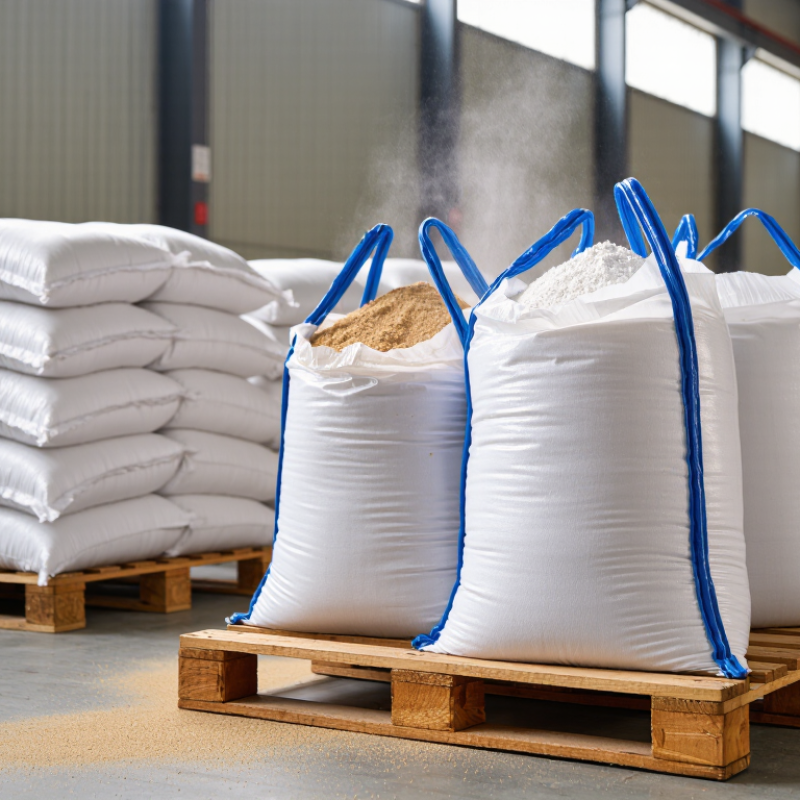
Before selecting premium FIBC bags, define the load precisely. Record the product’s bulk density, flow behavior, moisture sensitivity, temperature, and filling method. A one-ton bag can fail when the material bridges, shifts, or settles unevenly.
Know the working load limit.
ISO 21898 provides a framework for FIBC design, testing, and safe working loads. Common industry practice uses a 5:1 safety factor for single-trip bags and higher factors for reusable applications. These figures are not universal substitutes for testing. Product behavior matters more than a catalogue number. A dense mineral needs different fabric strength than a lightweight agricultural powder. Fine powders may also require coated fabric or controlled discharge features.
Intended use must include handling and transport. Will forklifts lift the bag from loops? Will it face outdoor storage, repeated filling, or sea freight? According to Grand View Research’s 2024 market assessment, the global FIBC market is expected to expand at roughly 5% annually through 2030. That growth reflects wider industrial use, but it also increases specification mistakes. Buyers should request test certificates, seam details, fabric construction, and documented load tests. Ask about stacking height too. It is often overlooked. In practice, I would not approve a design until the actual filling weight, pallet contact, lifting method, and storage duration are reviewed together.
Define the required safe working load (SWL) and intended use before selecting an FIBC bag. The benchmarks below reflect commonly specified FIBC load ratings for different industrial applications.
Typical FIBC ratings range from 500 kg to 2,000 kg. The final choice should also consider product density, filling and discharge methods, lifting configuration, transport conditions, and the required safety factor. Always confirm the certified SWL with the supplier before purchase.
Choosing premium FIBC bags starts with the fabric, not the product description. Ask for the fabric weight and load rating, then compare them with your actual filling and handling conditions. A bag that holds powder in a dry warehouse may behave differently outdoors or under repeated lifting. Check the weave for consistent spacing, and inspect seams for skipped stitches or loose threads. Small defects matter.
Design should match the filling line and discharge method. Confirm the dimensions, filling spout, discharge spout, and lifting loops before production. Loops should sit evenly and provide clear access for forklift handling. A sample filled with the intended material can reveal awkward loading or unstable stacking. It is not a perfect test, but it catches surprises.
Liners can help control moisture or contain fine materials, but fit matters. A liner that bunches near the outlet may slow discharge; one that is too tight can strain during filling. Ask how the liner is secured and whether its material suits the contents. Construction quality deserves close attention: review seam patterns, corner reinforcement, and loop attachments. Request inspection records and, where practical, test samples under realistic conditions. Specifications help, though they do not replace inspection. A detail can be missed. Check again.
How to Choose Premium FIBC Bags for Global Buyers?
Check Safety Standards and Market-Specific Compliance
A premium FIBC should match the product, filling method, lifting equipment, and destination market. Ask suppliers for test reports covering safe working load, safety factor, seam strength, and lifting-loop performance. ISO 21898 provides a useful reference for many flexible intermediate bulk containers, but buyers should confirm which standards apply to their shipment. A certificate alone is not enough. Check that its model, fabric, and construction match the bags you are ordering.
Requirements can vary by country and end use. Food-contact applications may require material declarations, traceability, and documented hygiene controls. Some markets also request specific labeling, language, or importer records. Confirm these details with your compliance team or a qualified local adviser before production. Keep samples, technical data sheets, and batch records together; they can help resolve questions when goods arrive.
Inspect a production sample, not just a polished brochure. Look closely at stitching, coated fabric, discharge spouts, and labels. Ask how the supplier controls changes between batches. Small differences matter. I have seen buyers focus on load capacity and overlook handling conditions at the destination. That is an easy mistake, and worth revisiting. A clear specification should state the intended use, required tests, and acceptance criteria before the order is placed.
| Selection Dimension | What to Verify | Relevant Standard or Requirement | Buyer Action |
|---|---|---|---|
| Safe working load (SWL) | Confirm the rated maximum load and ensure it matches the product’s bulk density, fill weight, and handling conditions. | ISO 21898 covers requirements for non-dangerous goods flexible intermediate bulk containers (FIBCs), including design and performance. | Compare the bag’s marked SWL with the intended payload; do not treat SWL as a suggested target to exceed. |
| Safety factor and single-trip use | Check the stated safety factor and whether the bag is designed for single-trip or multi-trip use. | ISO 21898 specifies performance and testing requirements for FIBCs; the appropriate design depends on the intended use. | Match the bag type to the required number of trips and follow the manufacturer’s handling and reuse instructions. |
| UN dangerous-goods approval | For hazardous materials, verify that the specific FIBC design and configuration are approved for the intended substance and transport conditions. | UN Model Regulations and applicable national or modal rules govern packaging for dangerous goods. UN approval is not a general requirement for every FIBC. | Request valid test documentation and confirm that the markings, packaging type, contents, and shipping route are compatible. |
| Food-contact suitability | Check whether the bag, liner, coatings, and other product-contact materials are suitable for the intended food or feed application. | EU food-contact materials are governed by Regulation (EC) No 1935/2004 and applicable specific measures. In the United States, relevant FDA food-contact requirements may apply. | Request material declarations and supporting compliance documents for the destination market and intended use. |
| Antistatic and combustible-dust risk | Assess whether the product or filling environment can create combustible dust or flammable atmospheres; identify the required FIBC type. | IEC 61340-4-4 describes test methods and classification for electrostatic properties of FIBCs used in potentially explosive atmospheres. | Have a competent safety professional assess the process and confirm that the selected bag type and grounding procedures are appropriate. |
| Construction and handling features | Inspect fabric, seams, lifting loops, discharge spouts, closure, liner, and dimensions against the filling and unloading system. | ISO 21898 provides a framework for FIBC design and performance; exact construction should suit the product and handling equipment. | Review technical drawings and request representative samples or test evidence for critical design features. |
| Destination-market documentation | Check import, labeling, chemical, food-contact, and dangerous-goods requirements that apply to the product and its packaging. | Requirements vary by destination, cargo classification, and end use; no single certification automatically covers every market. | Confirm current requirements with the importer, carrier, competent authority, or qualified compliance adviser before shipment. |
| Quality assurance and traceability | Review inspection plans, production controls, lot identification, test reports, and procedures for handling nonconforming bags. | Documented quality controls support consistency but do not replace product-specific testing or regulatory approvals. | Agree on acceptance criteria, required records, and traceability information before placing the order. |
Requirements depend on the cargo, intended use, transport route, and destination market. Verify current regulations and the applicability of each standard before purchase or shipment.
Premium FIBC selection starts with the supplier, not the printed specification. Ask how many lines can run consistently each month. Inspect weaving equipment, clean production zones, trained operators, and maintenance records. Capacity claims need evidence. Request recent production samples and compare them with approved specifications. An experienced supplier should explain material choices, seam design, filling limits, and handling conditions. Vague answers deserve caution.
Traceability connects each bag to a controlled production history. Look for lot numbers covering resin, fabric, thread, coating, inspection, and packing. Records should remain readable after shipment and easy to retrieve. During a factory review, ask staff to trace one finished bag backward. If the trail stops at packing, control is incomplete. That weakness may seem small until a damaged shipment reaches a remote warehouse. Still, traceability systems can contain gaps, especially during urgent orders. Good suppliers admit them and document corrective action.
Quality control must test performance, not merely appearance. Review sampling plans, test methods, calibration dates, and release authority. Useful checks include fabric strength, seam strength, dimensions, lifting loops, and drop performance. Ask for batch-level reports, not generic certificates. Independent testing can add confidence when cargo is sensitive or routes are long. Yet no audit replaces practical judgment. A clean factory can still miss a weak seam. Require clear acceptance criteria, retain samples, and a response plan for nonconforming bags. Small details decide reliability.
Compare Testing, Shipping, and Total Cost of Ownership
A premium FIBC bag should be selected through documented testing, not appearance. Ask for verified safe working load, safety factor, seam strength, and lifting-loop performance. Drop tests and top-lift tests reveal weaknesses that photographs cannot show. For powder products, check liner compatibility, sift resistance, and discharge control. Moisture-sensitive cargo may require stronger film or specialized barrier protection. Every report should identify the production lot, test method, and inspection date. Traceability matters when a shipment crosses several borders.
Shipping can quietly change the purchase decision. Measure the folded bag, liner, pallet pattern, and container loading plan together. A slightly larger bag may reduce pallet count, yet waste valuable container space. Compression during storage also deserves attention. We have seen well-tested bags arrive with damaged loops after poor stacking. The bag was not the only problem. Packing instructions were unclear. That mistake was avoidable, but not always avoided.
Total cost includes more than the unit price. Include testing, freight, storage, filling labor, discharge time, claims, and responsible disposal. Reusable designs can reduce waste, but only when cleaning and inspection are practical. A cheaper bag may create leakage, slow handling, or rejected cargo. Those costs are difficult to recover. Compare supplier records, sample performance, and realistic shipping scenarios before approving volume orders. Leave room for doubt. A spreadsheet can look precise while its assumptions remain weak.
It should suit the product, filling method, lifting equipment, and destination market. One bag rarely fits every use.
Ask for test reports on safe working load, safety factor, seam strength, and lifting-loop performance. Check that the reports match the exact bag design.
No. Compare its model, fabric, and construction with the bags being ordered. A certificate can look reassuring and still cover a different product.
Buyers may need material declarations, traceability, and documented hygiene controls. Check local labeling and record requirements before production.
Examine a production sample. Check stitching, coated fabric, discharge spouts, and labels. Small differences matter.
Ask for evidence of consistent monthly output, maintained equipment, trained operators, and recent samples. Capacity claims need proof.
Ask staff to trace one finished bag back through its material and production records. If the trail stops at packing, control may be incomplete.
Review sampling plans, test methods, calibration dates, and release authority. Retain samples and agree on acceptance criteria and corrective actions. Audits help, but they are not a guarantee.
Choosing Premium Fibc Bags begins with clearly defining the load requirements and intended application. Buyers should consider product weight, filling and discharge methods, stacking conditions, handling frequency, and environmental factors such as moisture, static electricity, or outdoor storage. These details help determine the appropriate fabric strength, bag design, liner type, lifting configuration, and construction quality for safe and efficient performance.
Global buyers should also evaluate safety standards, market-specific compliance, supplier capability, traceability, and quality-control procedures. Reliable suppliers should provide consistent production records, material verification, inspection systems, and relevant test documentation. Comparing tensile strength, seam performance, cleanliness, packaging, shipping efficiency, and delivery reliability can reveal the true total cost of ownership. A slightly higher initial investment may offer better durability, fewer handling problems, reduced product loss, and more predictable supply performance over time.

Zhensheng