China Top Bulk Bags for MSG Manufacturers?

Time:2026-09-19 Author:Ethan
0%

Choosing the right Bulk Bags For Msg manufacturer in China requires more than comparing prices. MSG is a fine, moisture-sensitive food ingredient. Its packaging must protect cleanliness, stability, and handling efficiency from production to delivery.

This introduction explores how leading Chinese manufacturers design bulk bags for monosodium glutamate. It considers food-grade polypropylene, inner liners, stitching quality, filling systems, discharge options, and load safety. A reliable bag may include a smooth internal surface, secure seams, and a liner that reduces moisture exposure. Small details matter. A weak stitch can become a costly problem.

Experienced buyers should also examine factory capability, quality records, sampling procedures, and communication practices. Certifications can support trust, but they should be verified against the actual production site and product scope. Factory photos are not enough. A sample inspection often reveals more than a sales presentation.

The best supplier is not always the largest manufacturer. It is the one that understands your MSG particle size, filling weight, storage conditions, and transport route. A 500-kilogram bag for a dry warehouse may require a different design from one used in humid coastal shipping.

There is no universal bag specification. That point is easy to overlook. This guide compares practical selection factors, common manufacturing concerns, and questions worth asking before placing an order. It also recognizes an uncomfortable reality: even a well-designed bag can fail when storage, filling, or handling procedures are poorly controlled. Reliable results depend on the complete packaging system, not the bag alone.
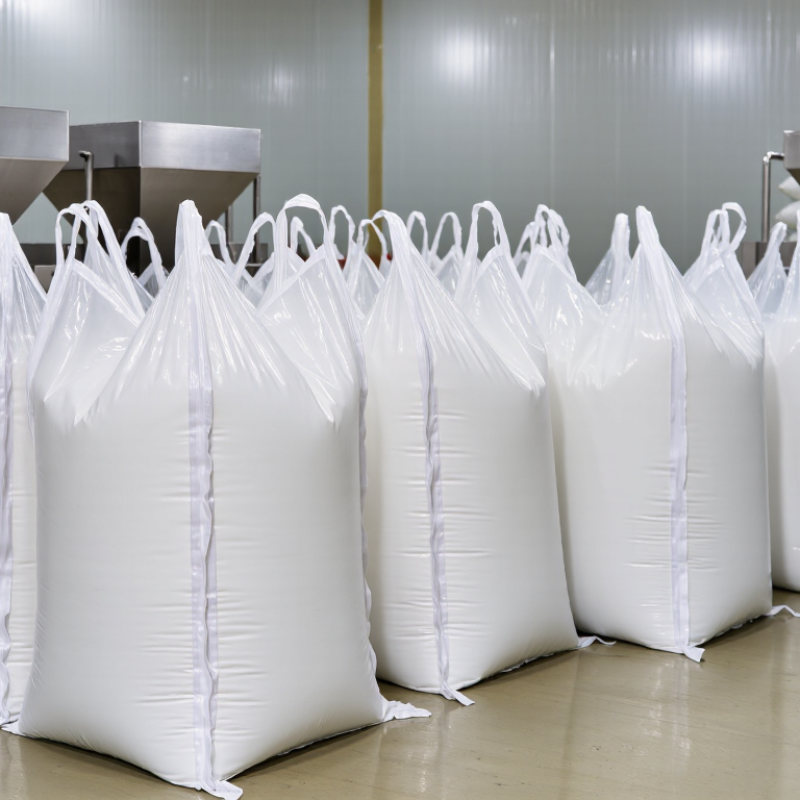
China Top Bulk Bags for MSG Manufacturers?

What Are Bulk Bags and Why Are They Used for MSG?

For MSG manufacturers, bulk bags are large flexible containers designed to move powdered ingredients safely and efficiently. They are commonly made from woven polypropylene and may include an inner liner for additional protection. A typical bag can hold several hundred kilograms, depending on its construction and handling system.

Clean handling matters.

MSG is a fine, free-flowing crystal, but humidity can cause caking and reduce discharge performance. A suitable bulk bag should control moisture exposure, limit dust release, and prevent foreign-material contamination. Food-contact materials, secure stitching, and traceable production records support reliable quality management. Bag design also affects warehouse work. Four lifting loops allow forklift or hoist handling, while a fitted discharge spout can reduce product loss during filling.

In my experience, the best selection starts with the actual process, not the lowest quoted price. Manufacturers should review filling speed, storage conditions, liner requirements, bag capacity, and discharge equipment. A small difference in fabric strength can become serious when bags are stacked or moved repeatedly. That assumption can fail. Operators sometimes focus on capacity and overlook electrostatic behavior, pallet stability, or cleaning procedures. These details deserve practical testing before regular production. Suppliers should provide clear specifications, inspection records, and samples for trial use. Local food-contact requirements must also be checked before purchase.

Key Features of High-Quality MSG Bulk Bags

China Top Bulk Bags for MSG Manufacturers?

Key Features of High-Quality MSG Bulk Bags

High-quality MSG bulk bags should protect crystalline powder from moisture, dust, and handling damage. MSG can absorb humidity, causing caking and slower discharge. A food-grade polypropylene body, combined with a sealed inner liner, helps maintain product flow. The liner should fit tightly, without folds that trap powder.

Safety matters too. ISO 21898 recommends performance testing for flexible intermediate bulk containers, including lifting, dropping, and repeated load checks. Many buyers select a 5:1 safety factor for standard handling, although actual requirements depend on filling and transport conditions. The bag should also have sift-proof seams, strong lifting loops, and a controlled discharge spout. Small details matter.

The 2024 Smithers market analysis reports continued growth in flexible intermediate bulk container demand, driven partly by food and powder applications. This growth does not mean every bag is suitable for MSG. Manufacturers should request migration documentation, batch traceability, and cleanliness records. Electrostatic control may be necessary in dry processing areas. It is easy to overlook. In practice, some bags pass visual inspection but fail after long warehouse storage. Humidity testing and real drop trials remain more convincing than attractive specifications.

How China’s Leading Bulk Bag Manufacturers Produce MSG Packaging

China’s leading bulk bag manufacturers produce MSG packaging through controlled material selection, clean handling, and repeated quality checks. Most bags use food-contact polypropylene fabric, chosen for strength and low moisture absorption. Production teams confirm resin documentation before weaving begins. That step sounds basic. It matters. Woven fabric is cut into panels, then stitched with calibrated machines. Operators inspect seam density, handle alignment, and fabric surfaces under bright lighting. For powdered MSG, a fine-particle liner can reduce leakage and protect the product from humidity. The liner design must match filling and discharge equipment, not merely look clean.

At the factory, technicians test lifting loops with measured loads and examine stress around each corner. They also check bag dimensions after sewing because small deviations can disrupt pallet stacking. Printing and labels are reviewed against approved specifications, including batch references and handling instructions. Clean production zones help limit foreign-material risks, while sealed packaging protects finished bags during storage and transport. Some manufacturers use metal detection or visual screening, depending on the customer’s documented control plan. Results should be recorded, not remembered. A missing inspection record can weaken an otherwise reliable shipment.

Experienced suppliers often provide samples for trial filling before mass production. This reveals practical problems, such as a discharge spout that opens too slowly or a liner that folds inward. Those details are easy to miss in drawings. Responsible teams adjust patterns, sewing tension, or liner dimensions after reviewing test data. No process is perfect. Humidity, operator technique, and handling equipment can still affect performance. Clear specifications and traceable production records give MSG producers a more dependable packaging process.

China Top Bulk Bags for MSG Manufacturers? - How China’s Leading Bulk Bag Manufacturers Produce MSG Packaging

Packaging Dimension Typical Specification for MSG Bulk Bags Production or Quality Requirement Why It Matters for MSG
Bag construction Flexible Intermediate Bulk Container made from woven polypropylene fabric Use food-contact-suitable raw materials when required by the destination market; maintain traceability by production batch Provides high strength with relatively low packaging weight and supports hygienic bulk handling
Common bag capacity 500–2,000 kg safe working load, selected according to MSG bulk density and filling equipment Confirm the safe working load, filling weight, discharge method, and pallet configuration before production Prevents overloading and improves compatibility with warehouse and transport systems
Safety factor Commonly 5:1 for single-trip applications; 6:1 may be specified for reusable designs Verify design and testing against the selected safety factor and applicable FIBC requirements Provides a controlled margin between the working load and the tested breaking performance
Typical dimensions Approximately 900–1,100 mm wide × 900–1,150 mm long × 900–1,800 mm high Dimension the body, filling inlet, and discharge outlet to match the customer’s equipment Reduces filling loss, improves stacking stability, and supports efficient container utilization
Fabric weight Commonly about 140–220 g/m² for the woven polypropylene body, depending on load and design Control fabric weight, tensile strength, elongation, and weave uniformity during inspection Balances load-bearing performance, puncture resistance, and packaging cost
Inner liner Loose polyethylene liner or form-fitted liner, commonly 50–100 micrometres thick Use a liner specification based on moisture protection, filling temperature, sealing method, and food-contact requirements Helps limit moisture ingress, product leakage, contamination, and powder retention in the woven fabric
Liner fit and attachment Loose, tabbed, glued, or sewn attachment; form-fitted liners are available for improved discharge Check liner dimensions, weld integrity, attachment points, and compatibility with automated filling Improves powder flow and reduces folds where MSG crystals may accumulate
Top filling design Standard fill spout, duffle top, or full-open top Select the inlet diameter and closure style according to filling line speed and dust-control equipment Supports clean, controlled filling and minimizes airborne powder during handling
Bottom discharge design Discharge spout with tie closure, flap closure, or safety valve; outlet diameter commonly 250–500 mm Match the outlet design to the receiving hopper, screw conveyor, or pneumatic conveying system Improves controlled emptying and reduces residual MSG inside the bag
Lifting loops Four corner loops are common; sleeve, cross-corner, and corner-to-corner designs are also used Inspect loop stitching, webbing strength, loop height, and forklift or crane compatibility Enables safer lifting, storage, and transfer of filled bags
Seam construction Lockstitch, chain stitch, or combination seams with compatible polypropylene sewing thread Control stitch density, seam allowance, thread tension, and loose-thread removal Reduces the risk of leakage, seam failure, and foreign-material contamination
Cleanliness control Controlled manufacturing area with internal cleaning, visual inspection, and sealed packing Remove dust, cuttings, insects, oil, and other foreign materials; define acceptable cleanliness criteria Protects the appearance, purity, and food-safety performance of MSG packaging
Static-control option Standard Type A, conductive Type C, or dissipative Type D design, selected after a risk assessment Specify grounding, resistance, and filling-environment requirements where combustible dust risks exist Helps manage electrostatic discharge during powder filling and emptying
Moisture protection Polyethylene liner combined with an appropriate outer bag construction and sealed transport packaging Evaluate water-vapor protection according to storage duration, climate, and transportation conditions Helps prevent caking, clumping, and changes in MSG flowability
Printing and identification One- to four-color flexographic printing, batch fields, handling symbols, and load information Use low-migration inks where required and verify print adhesion, legibility, and correct batch coding Supports traceability, warehouse control, and correct handling without relying on brand-specific data
Performance testing Visual inspection, dimensional checks, tensile testing, seam testing, lifting tests, and drop testing as applicable Use a documented inspection plan and sample testing based on the design, safety factor, and customer specification Confirms that the bag can withstand filling, lifting, stacking, and transportation stresses
Applicable references ISO 21898 may be used for FIBC performance requirements; food-contact rules depend on the destination market Confirm the latest legal, food-contact, transport, and customer requirements before approval Ensures the packaging design is suitable for the intended market and application
Storage and transport Pack clean, dry, and protected from ultraviolet exposure; avoid contact with sharp edges and excessive heat Define palletization, wrapping, maximum stacking height, and warehouse environmental conditions Preserves bag strength and helps maintain MSG quality before use

Note: Specifications shown are typical industry ranges for MSG bulk packaging. Final values should be confirmed through product density, filling equipment, handling conditions, destination-market regulations, and documented performance testing.

Food-Grade Standards for MSG Bulk Bags in China

China Top Bulk Bags for MSG Manufacturers?

Food-grade compliance should guide every MSG bulk bag purchase in China. The bag must protect monosodium glutamate from moisture, dust, odors, and foreign particles. Many suppliers use woven polypropylene with a sealed polyethylene liner. These materials should meet applicable requirements under China’s GB 4806 series. Ask for material declarations, migration test results, and a current Certificate of Analysis. Testing should reflect the bag’s actual use, storage conditions, and contact time.

A reliable manufacturer should operate documented GMP or HACCP procedures. Inspect liner sealing, stitching strength, cleanliness, and pallet protection. Production records should connect each shipment to resin batches and inspection results. Traceability matters when a torn liner or unusual odor appears. Factory audits can reveal details that documents miss. A certificate alone is not enough. In practice, small gaps often appear between written procedures and production floors.

Tips: Request samples before placing a large order. Fill them with MSG or a similar powder and check discharge performance. Examine inner surfaces under bright light. Confirm the liner remains sealed after transport simulation. Also ask how rejected bags are controlled. Some suppliers may provide excellent paperwork but inconsistent handling. That risk deserves a practical review.

How to Choose the Right Chinese Bulk Bag Manufacturer for MSG

China Top Bulk Bags for MSG Manufacturers?

How to Choose the Right Chinese Bulk Bag Manufacturer for MSG

Choosing a Chinese bulk bag manufacturer for MSG requires more than comparing prices. The bag must protect clean, dry material during filling, storage, and transport. Request food-contact material declarations, production records, and recent quality-test reports. These documents should match the actual fabric, liner, thread, and coating used in production.

Check the bag design in practical detail. A laminated polypropylene body can reduce moisture exposure, while a fitted inner liner offers an additional barrier. Confirm the safe working load, safety factor, filling method, and discharge style. For example, a four-loop bag with a flat bottom may suit forklift handling and controlled unloading. Ask for a production sample before approving a large order. Small details matter.

Inspect the factory’s process, not only its website. Look for fabric testing, stitching checks, cleanliness controls, and batch traceability. A reliable supplier should explain how rejected bags are separated and recorded. Clear communication about drawings, tolerances, lead times, and export packing is equally important. One useful lesson is simple: attractive samples can hide weak seams. Request seam-strength data and inspect stress points around loops and spouts. No supplier is perfect. I would still review the first shipment carefully, even after a successful audit. That extra check can reveal inconsistent dimensions, loose threads, or liner problems before they affect production.

How to Choose the Right Chinese Bulk Bag Manufacturer for MSG

Recommended assessment weighting for food-grade MSG bulk bag suppliers. Give priority to food-contact safety, hygiene control, load performance, and traceable quality documentation.

The evaluation framework reflects common FIBC purchasing requirements, including food-contact compliance, hygienic production, safe working load, quality documentation, customization capability, delivery reliability, and after-sales support. Confirm applicable requirements against ISO 21898 and the destination market’s food-contact regulations before ordering.

FAQS

What should a high-quality MSG bulk bag protect against?

It should protect crystalline powder from moisture, dust, odors, and handling damage. Humidity causes caking. A sealed inner liner helps maintain smooth discharge.

Which materials are commonly used for MSG bulk bags?

Food-contact polypropylene fabric is commonly used for strength and low moisture absorption. A polyethylene liner can provide an additional moisture barrier. Materials should have suitable food-contact documentation.

Why is the inner liner important?

The liner helps prevent leakage and limits humidity exposure. It should fit tightly without folds. Folded areas may trap powder and slow unloading.

What safety features should buyers inspect?

Check lifting loops, sift-proof seams, corner stitching, and the discharge spout. Performance testing may include lifting, dropping, and repeated loading.

Which documents should a buyer request?

Request material declarations, migration test results, cleanliness records, and a current Certificate of Analysis. Batch traceability should connect bags with resin and inspection records. Paperwork helps, but it is not everything.

How can manufacturers control production quality?

They should inspect fabric surfaces, seam density, handle alignment, and bag dimensions. Bright lighting can reveal contamination or damaged stitching. Inspection results should be recorded, not merely remembered.

Should buyers test samples before ordering in bulk?

Yes. Fill sample bags with MSG or a similar powder. Check filling, stacking, transport simulation, and discharge speed. Drawings may miss practical problems.

What food-safety practices matter during production?

Documented GMP or HACCP procedures can support clean and controlled manufacturing. Sealed packaging should protect finished bags during storage and transport. A certificate alone is not enough.

What problems can appear during warehouse storage?

Some bags pass visual inspection but perform poorly after long storage. Humidity can weaken powder flow and encourage caking. Real storage testing is wiser.

Can every supplier provide consistent quality?

No process is perfect. Operator technique, humidity, and equipment can affect results. Review samples, factory practices, rejected-bag controls, and traceable records carefully.

Conclusion

Bulk Bags For Msg are durable, flexible containers designed to store and transport monosodium glutamate efficiently. They help protect MSG from moisture, dust, contamination, and handling damage while reducing packaging, storage, and shipping costs. High-quality bags typically feature food-grade woven polypropylene, strong lifting loops, secure closures, clean inner surfaces, and excellent resistance to tearing and abrasion. Their size and discharge options can also be customized to match production and logistics requirements.

Leading Chinese manufacturers produce MSG bulk bags through controlled weaving, cutting, sewing, and inspection processes. Reliable suppliers follow food-grade production practices, maintain hygienic facilities, and provide testing or documentation for material safety, strength, cleanliness, and traceability. When choosing a manufacturer, buyers should evaluate product consistency, customization capabilities, quality-control procedures, production capacity, communication, and delivery reliability. Selecting the right partner ensures that MSG remains protected throughout filling, transportation, storage, and final handling.

Ethan

Ethan

Ethan is a seasoned marketing professional with a deep expertise in our company's innovative product line. With a passion for sharing knowledge and insights, he takes the lead in regularly updating our corporate blog, where he explores industry trends, product features, and effective marketing......