China’s Type D FIBC Bags market serves industries handling combustible powders, fine chemicals, minerals, and pharmaceutical ingredients. These bags require more than strong fabric and attractive pricing. Their safety depends on dissipative materials, controlled manufacturing, reliable stitching, and documented performance testing.
Dr. Mei Lin, a bulk-packaging engineer with experience in electrostatic-risk assessment, says, “A Type D bag is only as reliable as its fabric control, seam quality, and handling discipline.” This principle guides our review of China’s top ten Type D FIBC Bag manufacturers. We examine their production experience, material consistency, testing procedures, customization capabilities, and export reliability. Factory audits matter. So do sample inspections.
The strongest manufacturers typically show clear traceability from polypropylene yarn to finished bag. They can explain fabric resistance, lifting-loop design, liner compatibility, and safe discharge conditions. Some also provide batch records, test reports, and practical loading guidance. These details become visible on a warehouse floor: clean seams, balanced loops, readable labels, and no loose conductive threads.
Still, supplier claims should not be accepted blindly. Product certificates may vary in scope, and laboratory results may not represent every production batch. That is an uncomfortable point. Buyers should request current documentation and confirm requirements with qualified safety professionals. Type D FIBC Bags can reduce electrostatic ignition risks, but they do not eliminate every hazard. Proper grounding policies, compatible equipment, moisture control, and trained handling remain essential. This guide offers a practical comparison, while recognizing that price alone can hide important weaknesses.
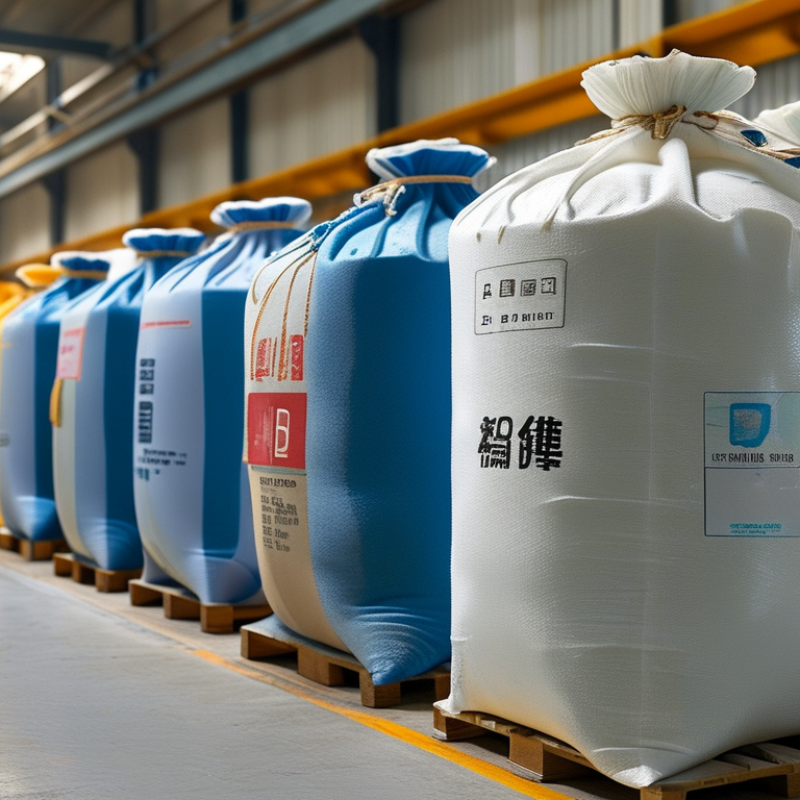
Type D FIBC bags are flexible bulk containers designed to control electrostatic discharge. They are commonly used for powders, granules, and other dry materials that may create static during filling or emptying. Unlike Type C bags, Type D bags do not normally need a grounding cable. Their fabric contains specialized dissipative fibers that release static energy through controlled corona discharge.
The process begins when particles rub against the bag wall. This friction generates an electrical charge. The conductive fibers spread that charge across the fabric, then dissipate it into the surrounding atmosphere. It works quietly. However, the system depends on clean, undamaged fabric and suitable operating conditions. Oil, dust buildup, moisture, or unauthorized repairs can affect performance. A Type D bag should never be treated as automatically safe in every environment.
Reliable manufacturers test fabric resistance, discharge behavior, seam quality, and lifting strength before shipment. Buyers should request current test records and confirm compatibility with the filling equipment. During use, workers should inspect the bag for cuts, contamination, and visible fiber damage. They should also control filling speed and prevent unnecessary contact with unsuitable conductive objects. In practical handling, people often focus on the bag’s load rating and overlook static-control maintenance. That is a mistake worth reconsidering. Type D performance is not permanent; storage, repeated handling, and poor cleaning decisions can gradually reduce its reliability.
| No. | Data Dimension | Typical Type D FIBC Data | How It Works / Selection Guidance |
|---|---|---|---|
| 1 | Electrostatic Classification | Type D FIBC | The fabric is designed to dissipate electrostatic charge without a separate grounding connection, when the bag is used according to the supplier’s instructions. |
| 2 | Primary Fabric | Woven polypropylene with integrated dissipative or antistatic yarns | Special yarn systems help control charge during filling, handling and discharge. The fabric should not be replaced with ordinary untreated polypropylene for hazardous dust applications. |
| 3 | Grounding Requirement | No dedicated grounding wire is normally required | Unlike Type C bags, Type D bags dissipate charge through their specialized fabric system. The bag must remain clean, dry and free from conductive contamination that could affect performance. |
| 4 | Common Safe Working Load | 500 kg to 2,000 kg, depending on construction | The actual SWL is determined by fabric strength, seam design, lifting-loop construction, test results and handling conditions. The rating printed on the bag must always be followed. |
| 5 | Typical Safety Factor | Commonly 5:1 or 6:1 for reusable or transport applications | A 5:1 or 6:1 ratio compares minimum breaking strength with the rated SWL. The required factor depends on applicable regulations, transport conditions and whether the bag is single-trip or reusable. |
| 6 | Typical Bag Dimensions | Approximately 85 × 85 × 90 cm to 115 × 115 × 180 cm | Dimensions are selected according to bulk density, filling equipment, pallet footprint, warehouse height and discharge requirements. Custom dimensions are widely available. |
| 7 | Typical Capacity | Approximately 0.7 m³ to 2.0 m³ | Volume must be matched with product bulk density so that the bag is filled within its rated weight and height limits. Overfilling can compromise stability and lifting safety. |
| 8 | Filling and Discharge Options | Open top, duffle top, conical top; flat bottom or discharge spout | The inlet and outlet design should match the filling line, valve arrangement and material flow characteristics. Controlled discharge helps reduce dust and handling exposure. |
| 9 | Suitable Product Categories | Many dry, combustible powders and granules requiring static-control packaging | Examples may include certain chemical powders, plastic pellets, mineral products and food ingredients. A formal risk assessment is required before use with combustible dusts or flammable atmospheres. |
| 10 | Quality and Performance Verification | Fabric resistance, breakdown-voltage behavior, seam strength, lifting strength and load testing | Purchasers should request current test reports, technical specifications and batch traceability. Type D performance can be affected by humidity, contamination, abrasion, repairs and unauthorized modifications. |
They hold powders, granules, and other dry materials that can generate static during filling or discharge.
Friction creates charge on the fabric. Specialized fibers spread it and release it through controlled corona discharge.
No, it normally works without a grounding cable. However, suitable conditions and clean fabric remain essential.
No. Oil, dust, moisture, damaged fibers, or unauthorized repairs can reduce static-control performance.
Check for cuts, contamination, damaged fibers, weak seams, and lifting-loop problems. Small defects matter.
Request current resistance tests, discharge results, seam checks, lifting-strength records, and batch inspection reports.
Compare three samples under identical conditions. Check fabric weight, dimensions, clean interiors, and safe working load.
Confirm size, filling and discharge styles, liners, baffles, printing, ultraviolet treatment, and the approved drawing.
Not always. Independent testing may reveal differences that photographs hide. A polished certificate is not enough.
Request a prototype first. Record every approved detail in the purchase agreement. Unclear drawings cause trouble.
This article provides a practical overview of Type D FIBC Bags, explaining how their electrostatic-protective design works and why they are suitable for handling sensitive powders and materials in controlled industrial environments. It introduces key safety considerations, including grounding requirements, material compatibility, handling procedures, and quality control measures that help reduce electrostatic risks during filling, storage, transportation, and discharge.
The guide also describes how Type D FIBC Bags are manufactured and tested, covering fabric selection, stitching, liner options, load performance, dimensional checks, and routine inspection procedures. It presents a structured review of China’s top ten manufacturers without focusing on brand promotion, helping readers understand differences in production capacity, certifications, testing systems, customization, lead times, and after-sales support. Finally, the article offers practical criteria for comparing suppliers so buyers can select reliable products that match their application requirements, safety expectations, packaging specifications, and budget.

 Zhensheng